

Foreign Investment in Dubai plays an important role in the emirate’s economic development, connecting international businesses, investors and capital with opportunities across regional and global markets. From multinational companies establishing regional headquarters to investors financing new projects and businesses expanding their international operations, Dubai attracts different forms of foreign investment across a wide range of industries.
Dubai’s foreign investment landscape extends beyond property purchases and company formation. It includes new industrial facilities, technology projects, financial services, tourism developments, logistics operations, professional services and the expansion of existing international businesses. Understanding these investment patterns helps readers identify where international capital is flowing, which sectors are attracting interest and how Dubai fits into the global investment landscape.
What Is Foreign Direct Investment in Dubai?
Foreign direct investment (FDI) occurs when an investor or company from one country establishes a lasting business interest in another economy. It can involve setting up a new operation, acquiring an ownership stake in an existing business or expanding a foreign-owned operation.
In Dubai, FDI can take several forms.
- Greenfield investment: A foreign company establishes a new business operation, office, production facility, technology centre or other project.
- Business expansion: An international company increases the capacity of an existing operation or adds new activities in Dubai.
- Mergers and acquisitions: A foreign investor acquires or invests in an existing company, subject to applicable regulations.
- Reinvestment: A company reinvests earnings or additional capital into its existing operations.
- Regional headquarters investment: A multinational company establishes or expands a base in Dubai to coordinate activities across multiple markets.
These categories describe different investment activities, and they should not be confused with every form of foreign financial investment. For example, a person purchasing a property and a multinational company establishing a technology centre represent different types of economic activity.
For Dubai, greenfield projects are particularly useful indicators of new business activity because they can demonstrate where companies are establishing operations and committing resources.
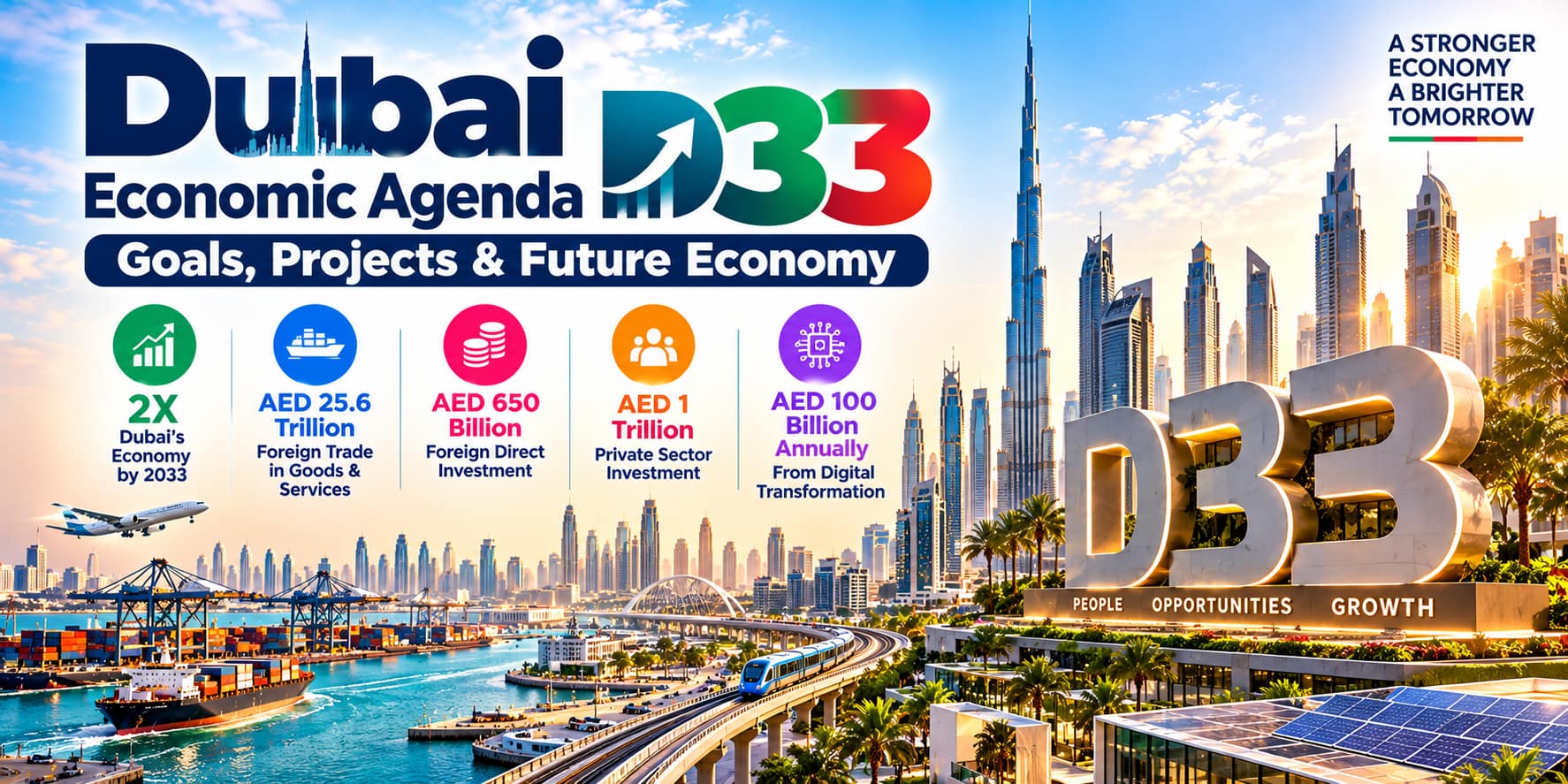
Dubai Economic Agenda D33: Goals, Projects & Future Economy
Dubai FDI Performance and Investment Trends
Dubai’s investment performance can be assessed through announced projects, estimated capital flows, sector distribution and the international companies choosing the emirate for expansion.
According to Dubai government reporting, the emirate remained a leading global destination for greenfield foreign direct investment projects. Its investment profile includes both established sectors and newer technology-driven activities.
Dubai Professional Services & Knowledge Economy: Key Sectors, Expertise & Economic Growth
Dubai’s official investment reporting identified the following leading sectors by estimated FDI capital flows in 2024:
- Hotels and tourism
- Real estate
- Software and IT services
- Building materials
- Financial services
Together, these sectors represented an important share of the capital entering Dubai through foreign direct investment.
The pattern of announced projects was somewhat different. Business services, food and beverages, software and IT services, textiles and consumer products were among the leading sectors by project count.
This distinction matters because the number of projects and the amount of capital invested measure different things. A sector may attract many smaller projects without receiving the largest overall capital commitment. Another sector may attract fewer projects involving substantial investment.
For readers following Dubai’s investment outlook, both indicators provide useful information about the breadth and scale of international business activity.
Dubai Entrepreneurship & Startup Ecosystem: Key Hubs, Accelerators & Founder Support
Which Countries Invest in Dubai?
Dubai attracts investment from a range of international markets. Investors may choose the emirate to serve customers in the Middle East, expand into neighbouring markets, establish regional operations or develop projects within particular industries.
Dubai FDI Monitor data for the first half of 2025 identified the United States, United Kingdom, France, India and Saudi Arabia among the leading source markets by estimated FDI capital flows.
The leading source markets by announced project count were not identical, demonstrating that countries can differ in the scale and number of their investments.
United States
American companies and investors may use Dubai as a base for regional commercial activities, technology operations, professional services and international expansion.
Investment decisions depend on individual company strategies, sector requirements and the markets each business intends to serve.
United Kingdom
British investment is connected with a range of business activities, including professional services, finance, technology and international commercial operations.
Dubai’s position as a regional business centre can make it relevant to companies seeking to coordinate activities across multiple markets.
India
Indian companies and investors participate in Dubai’s business environment across sectors such as trade, technology, professional services, consumer businesses and manufacturing-related activities.
For businesses serving customers across the Gulf and wider international markets, Dubai can provide access to commercial networks and regional business infrastructure.
France and Saudi Arabia
French companies participate in international business activities spanning services, consumer products, technology and other sectors. Saudi investors and businesses also have commercial connections with Dubai through regional trade, investment and cross-border expansion.
The importance of individual source markets changes over time. Investors should therefore consult the latest available FDI reports rather than assuming that a ranking remains unchanged every year.
Major Sectors Attracting Foreign Investment in Dubai
Foreign investment in Dubai is distributed across several industries. Understanding the differences between these sectors gives international readers a clearer picture of the emirate’s investment profile.
Real Estate and Property Development
Real estate is one of Dubai’s established investment sectors. International capital participates in residential developments, commercial property, hospitality-related projects and other property-linked activities.
Foreign direct investment in real estate projects should be distinguished from individual property purchases. FDI statistics generally focus on qualifying business investment, while property-market statistics may measure sales, transactions and other forms of ownership activity.
Investors assessing this sector should examine project demand, financing conditions, operating costs, regulatory requirements and the risks associated with property-market cycles.
Hotels and Tourism
Dubai’s tourism economy supports investment in hotels, resorts, hospitality services, entertainment infrastructure and related commercial activities.
International companies may invest in new hospitality projects, expand existing operations or enter partnerships with established local businesses.
The sector’s investment appeal depends on visitor demand, accommodation supply, operating performance and long-term development plans. A strong tourism market does not remove the commercial risks associated with individual projects.
Software and IT Services
Software and IT services are important parts of Dubai’s foreign investment profile.
Investment can involve software development, enterprise technology, cloud-related services, digital platforms and technology operations serving regional or international customers.
International companies may also establish technology teams or regional business functions to support clients across multiple markets.
For investors, the key considerations include access to talent, customer demand, infrastructure, data-related obligations and the ability to compete in a rapidly changing technology market.
Financial Services
Dubai attracts international financial businesses through its established commercial networks and specialised financial ecosystem.
Investment activity can include financial services operations, professional support functions, technology serving financial institutions and other eligible activities.
Some financial activities are subject to additional regulatory requirements. Investors must determine which approvals and permissions apply to their proposed operations before committing capital.
Business and Professional Services
Business services cover a wide range of activities, including consulting, engineering, management services, specialist professional support and other services used by companies operating internationally.
These businesses can establish a presence in Dubai to serve regional customers, manage cross-border operations or provide expertise to companies entering new markets.
The sector is particularly diverse, meaning investment opportunities and operating requirements can differ considerably between individual business activities.
Transportation, Warehousing and Logistics
Dubai’s ports, airport infrastructure and commercial connections support investment in logistics, distribution, warehousing and related services.
International businesses may establish regional distribution operations, expand supply-chain capacity or develop services that connect suppliers with customers across several markets.
Investors should assess logistics costs, operational requirements, customer contracts and the changing needs of regional and international trade.
Food, Beverages and Consumer Products
Dubai’s international population and commercial environment support demand for food products, beverages and a broad range of consumer goods.
Foreign investment may involve manufacturing, distribution, retail-related operations and the establishment of regional business functions.
The commercial prospects of individual projects depend on customer demand, competition, supply-chain reliability, product requirements and operating margins.
Global Companies in Dubai: Why Multinationals Choose the City
Global companies in Dubai operate across a wide range of industries. Some establish regional headquarters, while others use the emirate for sales, customer support, logistics, technology development or specialised business functions.
For multinational companies, a regional headquarters can coordinate activities across multiple countries. Depending on the organisation, it may manage commercial strategy, regional finance, business development, marketing, supply-chain coordination or relationships with local partners.
Dubai’s international business connections can support this approach, particularly for companies serving customers across the Middle East, Africa and South Asia.
However, a regional headquarters is not the same as a company’s global headquarters. A multinational may retain its principal corporate headquarters in another country while using Dubai to manage a particular region.
Regional Headquarters and International Expansion
Companies evaluating Dubai for regional operations typically assess market access, transport connections, talent availability, operating costs and the regulatory environment.
They may also consider whether the location supports their long-term commercial strategy and whether the business can operate effectively from Dubai.
The investment decision is therefore based on a combination of commercial, operational and strategic factors rather than a single advantage.
Technology and Innovation Operations
International technology businesses may establish offices, development teams, research activities or other technology-related operations in Dubai.
Such investments can support customer service, regional expansion and collaboration with other businesses.
Technology projects may also require specialised infrastructure, data-management arrangements and sector-specific approvals, depending on their activities.
Industrial and Manufacturing Operations
Dubai’s investment profile also includes industrial and manufacturing-related projects.
These may involve production facilities, industrial equipment, building materials and other activities connected with regional demand and supply chains.
Companies considering industrial investment need to assess site requirements, utilities, logistics, labour availability, environmental obligations and the commercial feasibility of their proposed operations.
Dubai FDI Monitor: How to Track Foreign Investment
The Dubai FDI Monitor is an investment intelligence platform developed by Dubai’s Department of Economy and Tourism.
It provides tools and information for exploring Dubai’s foreign direct investment activity, including investment flows, projects, source markets and sector-level trends.
For investors, researchers, business journalists and companies evaluating Dubai, the platform can help answer practical questions:
- Which sectors are attracting foreign direct investment?
- Which countries are important sources of investment?
- Where are companies announcing new projects?
- How are investment patterns changing over time?
- Which industries are attracting capital compared with project numbers?
Its investment map and reporting resources can help readers explore the relationship between international source markets, industries and projects.
When interpreting the data, it is important to distinguish announced projects from completed projects and estimated investment from confirmed capital expenditure. Investment announcements provide useful signals, but they do not always mean that the full project has already been implemented.
For accurate comparisons, readers should also check the reporting period, definitions and measurement methods used in each report.
How Foreign Investment Supports Dubai’s Economy
Foreign direct investment can contribute to Dubai’s economy through several channels.
Employment and Skills Development
New projects can create jobs in professional services, technology, construction, logistics, hospitality, manufacturing and other industries.
Some investments may also bring specialist knowledge, training opportunities and experience in international business practices.
The number and type of jobs created depend on the project, its scale and the industry involved.
Technology and Knowledge Transfer
International companies can introduce new technologies, management practices and specialised expertise into the local business environment.
Local suppliers, employees and business partners may benefit when knowledge is shared through commercial relationships and professional collaboration.
The extent of these benefits varies between projects and depends on how operations are structured.
Business Relationships and Supply Chains
International investment can create opportunities for local suppliers, service providers and other businesses to work with multinational companies.
These connections may support new contracts, improve access to customers and strengthen relationships across regional supply chains.
However, opportunities are not automatic. Suppliers must meet the relevant commercial, technical and operational standards.
Economic Diversification
Investment across technology, professional services, logistics, hospitality and industrial activities can broaden the range of economic activity.
Diversification can help create additional sources of growth, although individual sectors remain exposed to market cycles, competition and changing international conditions.
Foreign Investment Rules and Ownership Considerations
International investors should understand the rules that apply to their specific business activity.
Dubai permits 100% foreign ownership across many mainland business activities, subject to applicable laws and activity-specific restrictions. Free zones also offer ownership arrangements and operating environments designed for different business needs.
However, not every activity follows the same rules. Certain strategic or regulated activities may require additional conditions, approvals or specific ownership arrangements.
The correct approach depends on the proposed activity, business structure, location and relevant regulatory authority.
Foreign investors should also consider corporate tax, any applicable free-zone tax conditions, licensing, employment obligations, banking requirements and other compliance responsibilities. Tax treatment and regulatory obligations should never be assumed solely from the location of incorporation.
Detailed company formation procedures and free-zone comparisons are separate topics and should be evaluated according to the investor’s actual business requirements.
Risks and Considerations for International Investors
Dubai’s investment environment offers opportunities, but every investment carries risks.
Market competition: An attractive market may also contain established competitors. Investors need evidence of customer demand and a realistic view of the competitive landscape.
Operating costs: Rent, salaries, financing, technology and other expenses can affect the profitability of a project.
Regulatory requirements: Some sectors require specialised licences, approvals or continuing compliance. These requirements should be confirmed before funds are committed.
Market fluctuations: Real estate, tourism, consumer demand and other sectors can be affected by economic conditions and changes in investor sentiment.
Project execution: Delays, supply-chain issues, financing constraints and changes in project costs can affect expected returns.
Currency and cross-border exposure: International investors may face currency movements, international tax considerations and legal obligations in more than one jurisdiction.
A sound investment assessment should examine the commercial fundamentals of the specific project rather than relying entirely on Dubai’s overall investment reputation.
The Outlook for Foreign Investment in Dubai
Dubai’s investment landscape continues to develop across established industries and newer areas of economic activity. Technology, software, business services, logistics, tourism, finance and industrial projects remain relevant to the emirate’s broader economic development.
The future distribution of investment will depend on global economic conditions, company expansion strategies, technological developments, capital availability and the competitiveness of individual sectors.
For international businesses, Dubai may offer a suitable location for regional operations or expansion when its infrastructure, market access and business environment align with their commercial objectives.
Investors should follow current project announcements, official FDI reports and sector-specific market information to understand where investment is developing and how conditions are changing.
Conclusion
Foreign Investment in Dubai connects international capital with opportunities across real estate, tourism, technology, finance, business services, logistics and other sectors. The emirate attracts different forms of investment, from new greenfield projects to multinational regional headquarters and business expansion.
Understanding the distinction between investment capital, project numbers, company establishment and property transactions is essential when evaluating Dubai’s investment performance.
For investors and global companies, the most useful approach is to combine current FDI data with sector research, commercial due diligence and a clear understanding of applicable regulations. This provides a more reliable basis for assessing Dubai’s role in international investment and long-term business expansion.






Dubai Entrepreneurship & Startup Ecosystem Guide
[…] Foreign Investment in Dubai: FDI, Investors & Global Companies […]