Dubai Finance & Financial Services play an important role in connecting businesses, investors and financial institutions across international markets. Dubai has developed a broad financial ecosystem covering banking, wealth management, insurance, investment services, capital markets and financial technology. Its strategic location between Europe, Asia and Africa also makes the city an important base for financial institutions serving the Middle East, Africa and South Asia.
At the centre of this ecosystem is the Dubai International Financial Centre (DIFC), which provides a specialised environment for financial institutions, investment firms, fintech companies and professional services businesses. Alongside DIFC, Dubai’s wider financial sector includes commercial banks, payment providers, insurance companies, investment platforms and financial market infrastructure.
Understanding how these services operate helps businesses, investors and international readers understand Dubai’s position in the global financial system.
1. Understanding Dubai’s Financial Services Sector
Dubai’s financial services sector includes institutions and businesses that manage money, provide credit, protect assets, facilitate payments and connect investors with financial opportunities.
The sector serves individuals, local businesses, multinational companies, institutional investors, family offices and government-related organisations.
Dubai Technology & Innovation Economy: AI, ICT & Startups
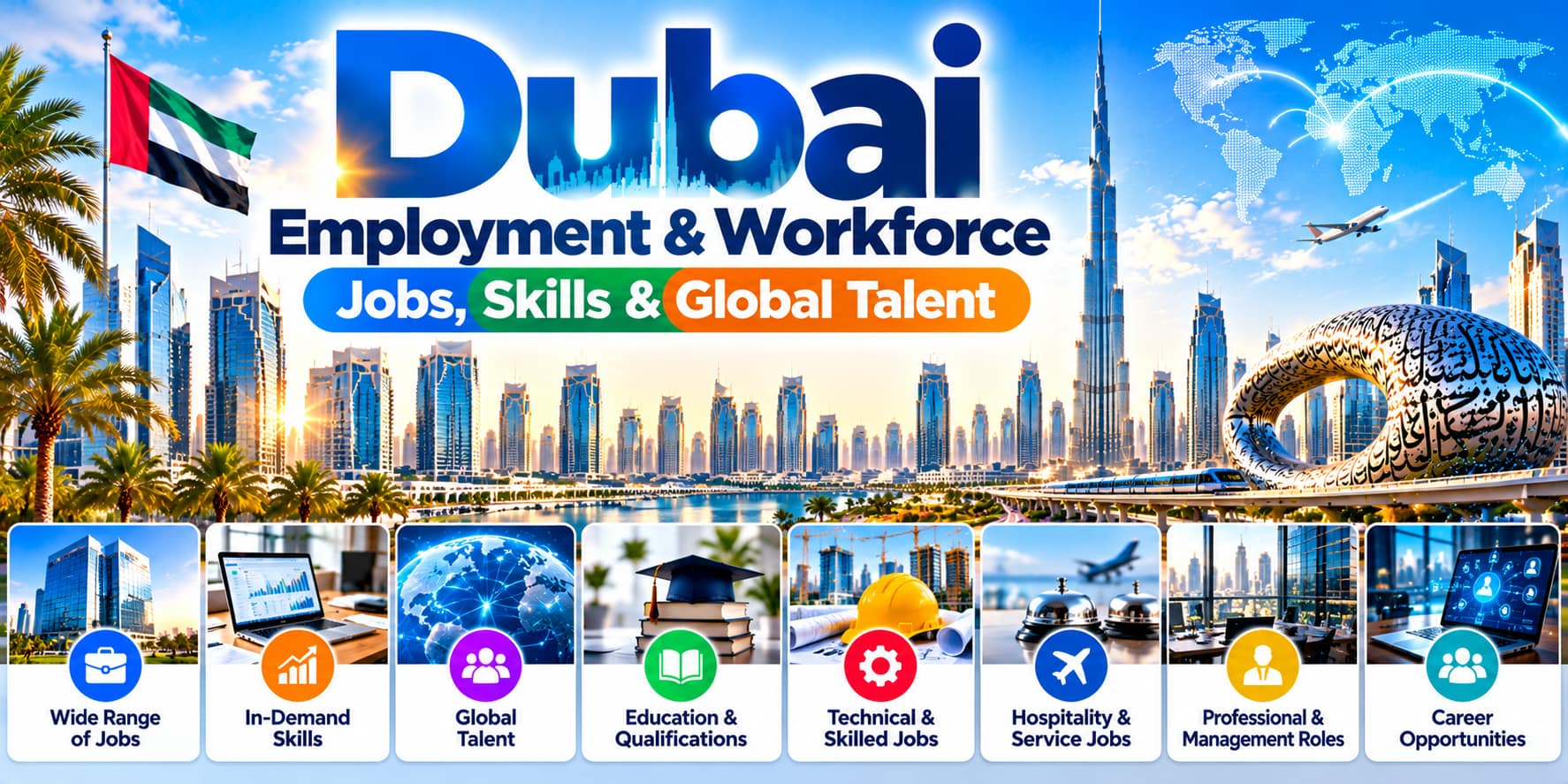
Dubai Employment & Workforce: Jobs, Skills & Global Talent
Its main areas include:
- Banking: Personal accounts, business banking, lending, trade finance and international payments.
- Investment services: Portfolio management, investment advisory, securities and fund management.
- Wealth management: Financial planning and management of assets for individuals, families and institutions.
- Insurance: Life, health, property, business and specialised insurance products.
- Capital markets: Securities trading, bond and sukuk listings, and other investment market activities.
- Financial technology: Digital payments, financial software, online financial services and emerging financial technologies.
- Islamic finance: Financial products and services structured according to Islamic financial principles.
These activities support companies operating across trade, technology, real estate, logistics, manufacturing and other sectors of Dubai’s economy.
2. Dubai International Financial Centre (DIFC)
The Dubai International Financial Centre is one of the most important parts of Dubai’s financial ecosystem. Established as a specialised financial district, DIFC provides an environment for financial institutions and related businesses serving regional and international markets.
DIFC brings together banks, investment managers, insurers, fintech companies, legal firms and other professional service providers.
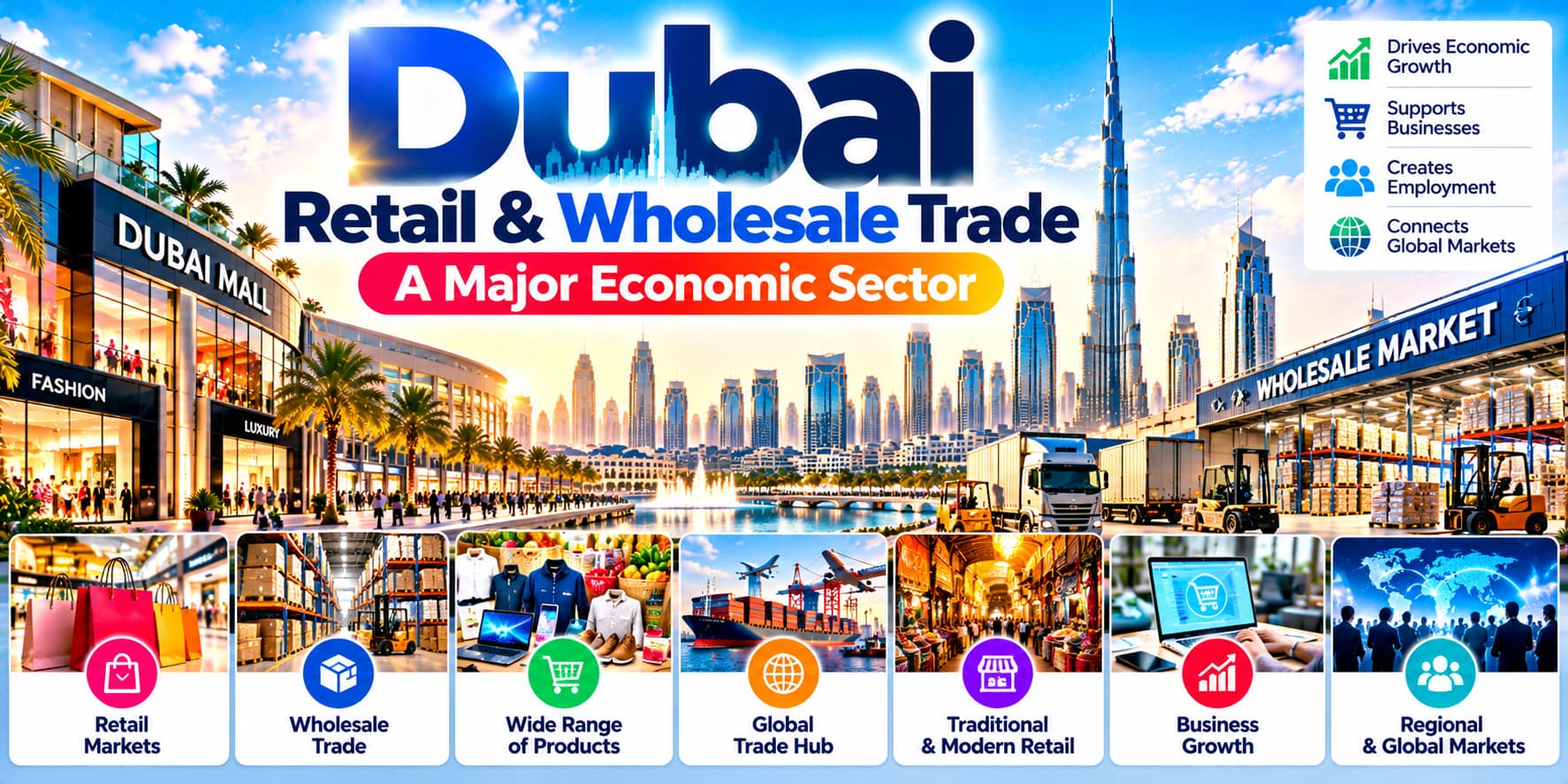
Dubai Retail & Wholesale Trade: A Major Economic Sector
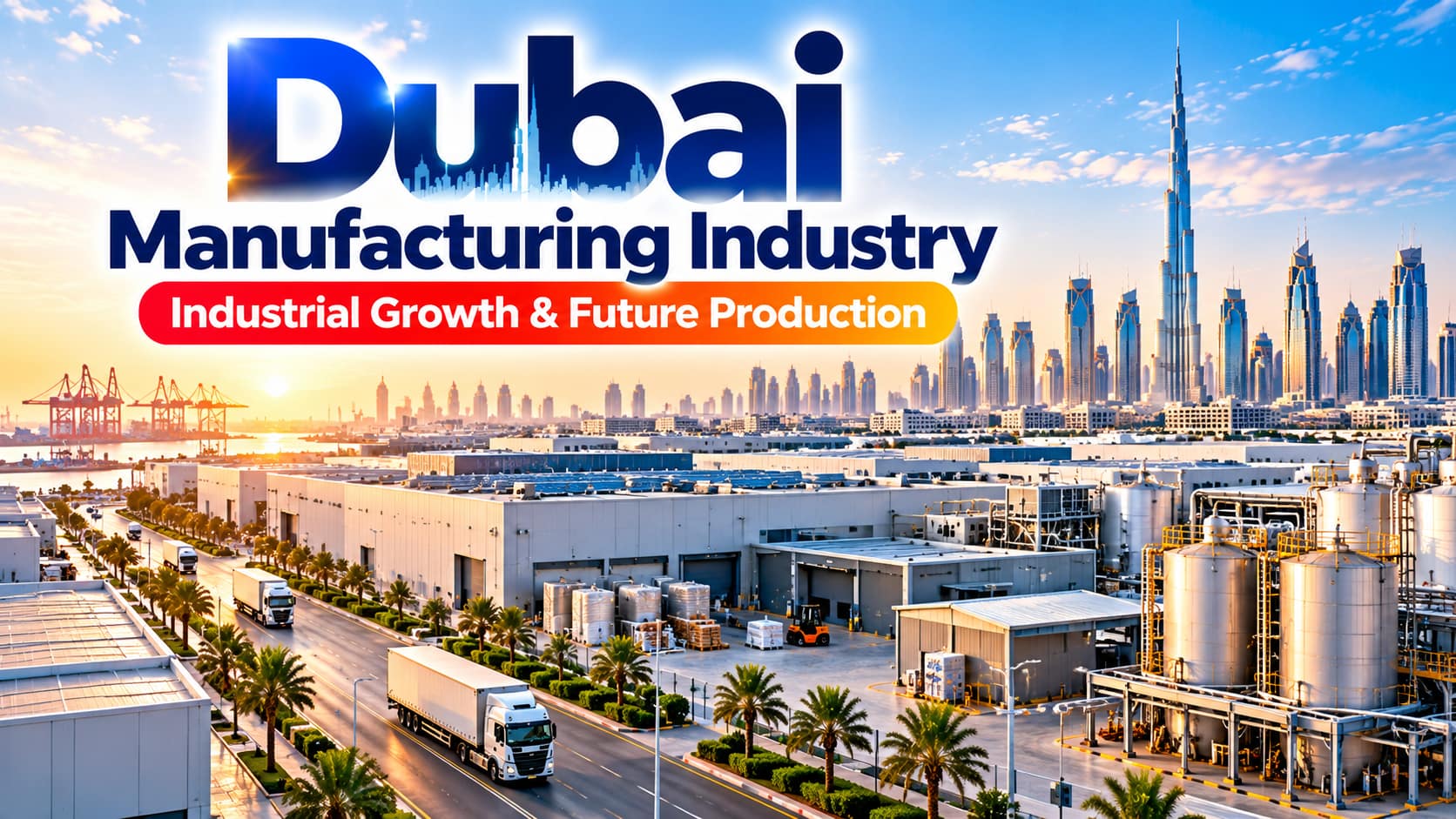
Dubai’s Manufacturing Industry: Industrial Growth & Future Production
Key Features of DIFC
A specialised legal and regulatory environment: DIFC operates under its own civil and commercial legal framework, distinct from the UAE’s general civil and commercial laws. The Dubai Financial Services Authority (DFSA) regulates financial services conducted in or from DIFC within its jurisdiction.
International financial institutions: The centre attracts international banks, asset managers, investment firms, insurers and financial technology businesses.
Investment and wealth management: DIFC supports firms that manage investment portfolios, private wealth, funds and institutional assets.
Financial innovation: Its ecosystem includes fintech companies, innovation programmes and businesses developing new financial products and services.
Professional services: Legal, accounting, consulting and other specialist firms support the requirements of financial institutions and their clients.
DIFC’s Growth and Economic Importance
DIFC continued expanding during 2026. By the end of June 2026, it reported 10,018 active registered companies, including 1,134 regulated financial services firms. Its ecosystem also included banking and capital markets firms, insurance and reinsurance businesses, and wealth and asset management companies.
These figures demonstrate the scale of DIFC’s role in connecting financial institutions with opportunities across regional and international markets.
However, DIFC is only one part of Dubai’s financial sector. The wider emirate also has a substantial banking, insurance, payments and investment services industry outside the centre.
3. Banking Services in Dubai
Banking is a foundational component of Dubai’s financial services industry. Banks provide the financial infrastructure that individuals, entrepreneurs, small businesses and multinational corporations need to manage money and conduct transactions.
Personal Banking
Personal banking services generally include:
- Current and savings accounts
- Debit and credit cards
- Domestic and international transfers
- Personal loans and other eligible credit products
- Foreign currency services
- Digital and mobile banking
Account eligibility, minimum balance requirements, documentation and fees depend on the bank, account type and the customer’s residency or financial circumstances.
Corporate and Business Banking
Businesses require banking services to manage daily operations, receive payments and pay suppliers. Corporate banking may include business accounts, working capital facilities, corporate cards, cash management, payroll services and trade finance.
International companies may also require multi-currency accounts, cross-border payment facilities and banking arrangements that support operations in several countries.
Banks conduct customer due diligence and may request company documents, proof of business activity, beneficial ownership information and other supporting records before opening accounts or providing particular services.
Trade Finance and International Payments
Dubai’s role in international trade creates demand for banking services that support importers, exporters and logistics businesses.
Trade finance may include letters of credit, bank guarantees, documentary collections and other facilities subject to the bank’s assessment and applicable regulations.
International payments are also important for companies dealing with suppliers, customers and employees in different countries. The cost, speed and availability of transfers depend on the banks, payment channels, currencies and compliance checks involved.
4. Wealth Management and Asset Management in Dubai
Wealth management and asset management are significant parts of Dubai’s financial ecosystem.
Although the terms are related, they describe different services.
Wealth management focuses on the broader financial needs of individuals, families and other clients. Services may include investment planning, portfolio oversight, succession planning, risk management and coordination with tax or legal advisers where appropriate.
Asset management generally involves managing investment assets according to a defined strategy, mandate and risk profile. Asset managers may oversee equities, bonds, investment funds, private market investments and diversified portfolios.
Family Offices and Private Wealth
Dubai has developed an ecosystem of private banks, wealth advisers, family offices and investment professionals. These organisations serve clients who need coordinated support for managing assets, business interests and long-term financial objectives.
DIFC is one location where these services are concentrated.
Family offices and private wealth businesses may support investment oversight, governance, succession planning and the administration of family assets. The specific services available depend on the organisation’s authorisations and the client’s requirements.
Investment Funds and Portfolio Management
Investment management firms may offer or manage funds focused on public markets, private equity, private credit, real estate, hedge fund strategies or other asset classes.
Investors should assess a fund’s investment objectives, fees, liquidity restrictions, risk disclosures, regulatory status and redemption conditions before committing capital.
The availability of investment products does not mean that returns are guaranteed. Market fluctuations, economic conditions and the performance of individual investments can result in losses.
5. Financial Markets and Investment Infrastructure
Dubai’s financial ecosystem includes institutions and infrastructure that help businesses raise capital and enable investors to access financial markets.
Dubai Financial Market
The Dubai Financial Market (DFM) is a securities exchange where eligible investors can trade listed securities, subject to applicable market rules and account requirements.
It provides a platform for companies to access public capital markets and for investors to buy or sell listed shares and other permitted instruments.
Nasdaq Dubai
Nasdaq Dubai is an international financial exchange based in Dubai. Its market activities include debt securities, sukuk and other listed financial instruments.
Sukuk are financial certificates structured to comply with Islamic finance principles. They are used by eligible issuers to raise capital and can attract investors seeking exposure to Sharia-compliant financial instruments.
How Financial Markets Support Dubai
Financial markets can help companies diversify their sources of funding, increase visibility among investors and access capital for business development.
They also provide investment opportunities for eligible investors. However, trading securities involves market risk, and investors should understand the relevant instrument, issuer, costs and regulatory requirements before participating.
6. Insurance and Risk Management Services
Insurance is another important part of Dubai’s financial services industry. It helps individuals and businesses manage specified financial risks by transferring eligible risks to an insurer under the terms of a policy.
Main Types of Insurance
Health insurance: Provides coverage for eligible medical expenses according to the policy and applicable requirements.
Life insurance: Offers financial protection under specified conditions for beneficiaries or policyholders.
Property insurance: Covers certain risks affecting residential, commercial or industrial property.
Business insurance: May include public liability, professional indemnity, employee-related coverage and protection against specified operational risks.
Marine and aviation insurance: Supports industries that face specialised risks involving shipping, cargo, aircraft and related operations.
Reinsurance: Allows insurers to transfer part of their own risk exposure to another insurance company.
DIFC has an established insurance and reinsurance ecosystem, while the wider Dubai market serves individuals, businesses and industries throughout the emirate.
Insurance products differ significantly in coverage, exclusions, deductibles and claims conditions. Customers should review policy wording carefully rather than assuming that every type of loss is covered.
7. Financial Technology (FinTech) in Dubai
Financial technology, commonly known as fintech, uses digital tools to improve the delivery of financial services. Dubai’s fintech ecosystem includes payment companies, financial software providers, digital finance businesses and firms developing technology for banks and investment institutions.
Major Areas of FinTech
Digital payments: Technology that enables electronic payments, merchant transactions and money transfers.
Financial software: Systems used for accounting, invoicing, reporting, reconciliation and financial administration.
Digital banking: Technology that supports remote account access, digital on boarding and online financial transactions.
Investment technology: Platforms and software used for investment information, portfolio administration and eligible trading services.
Regulatory technology: Tools that help financial institutions manage compliance, reporting, customer verification and financial crime controls.
Artificial intelligence: AI can support fraud detection, customer service, financial analysis and selected operational processes, subject to appropriate controls.
DIFC Innovation Hub
DIFC’s Innovation Hub supports companies operating across fintech, artificial intelligence and other innovation-related fields. It connects businesses with an established financial ecosystem and provides a setting for collaboration between technology firms, investors and financial institutions.
In September 2026, Dubai was ranked first globally for fintech in the Global Financial Centres Index, according to the published results reported by DIFC.
This ranking reflects the city’s growing international profile in financial technology. It should not be interpreted as a guarantee that every fintech provider is licensed, reliable or suitable for every customer.
Regulation and Consumer Protection
Financial technology businesses may require specific licences or approvals depending on the services they provide, the customers they serve and the jurisdiction in which they operate.
Businesses and consumers should verify the relevant regulatory status before using services involving payments, investments, lending, digital assets or other regulated activities.
8. Islamic Finance and Financial Innovation
Islamic finance forms part of Dubai’s broader financial ecosystem. It offers financial products structured around principles that prohibit interest-based lending and require compliance with relevant Sharia standards.
Products may include Islamic banking accounts, financing arrangements, sukuk and Islamic investment funds.
Dubai’s financial institutions serve customers with different financial preferences, including those seeking Sharia-compliant products. The structure, risk profile and contractual terms vary by product and provider.
Financial innovation is also expanding into areas such as digital payments, tokenisation, automated financial services and AI-supported operations. These developments create new opportunities but also require effective governance, cybersecurity, risk management and regulatory oversight.
9. Financial Regulation in Dubai
Financial regulation helps maintain market integrity, protect customers and establish requirements for institutions providing financial services.
Dubai’s regulatory landscape includes several authorities, with responsibilities depending on the institution, activity and jurisdiction.
- Dubai Financial Services Authority (DFSA): Regulates financial services conducted in or from DIFC within its jurisdiction.
- Central Bank of the UAE: Oversees relevant banking, monetary and other financial activities under its federal mandate.
- Securities and Commodities Authority (SCA): Has regulatory responsibilities for relevant securities and commodities activities under the UAE framework.
- Dubai Financial Services Market Infrastructure: Exchanges and other market institutions operate under their applicable regulatory and market rules.
DIFC’s regulatory framework should not be confused with the regulatory arrangements that apply to every financial business elsewhere in Dubai or the UAE.
Anyone selecting a bank, investment adviser, insurance provider or fintech service should confirm which authority regulates the provider and whether its permissions cover the service being offered.
10. How Dubai’s Financial Sector Supports Other Industries
Dubai’s financial services industry supports economic activity well beyond banks and investment firms.
International trade and logistics: Trade finance, payment services and currency transactions help businesses manage cross-border commercial activity.
Real estate and construction: Banks, insurers and investment managers provide financing and risk-management services to eligible property and construction projects. Property market analysis itself belongs to the separate real estate sector.
Technology and innovation: Financial institutions provide capital, payments infrastructure and commercial opportunities for technology businesses.
Manufacturing and retail: Business banking, working capital facilities and payment systems support purchasing, production and sales.
Tourism and hospitality: Payment networks, business finance and insurance services help tourism-related businesses manage transactions and operational risks.
International investment: Wealth managers, investment advisers and financial markets connect eligible investors with companies, funds and other financial opportunities.
The availability of financial services can improve the efficiency of business operations, although access to finance always depends on eligibility, risk assessment, commercial terms and regulatory requirements.
11. Opportunities and Challenges in Dubai’s Financial Services Industry
Dubai’s financial sector benefits from international connectivity, an established banking industry, specialist financial infrastructure and a growing fintech ecosystem.
Key opportunities include:
- Expansion of wealth and asset management services
- Growth in digital payments and financial technology
- Demand for trade finance and cross-border banking
- Development of insurance and reinsurance services
- Innovation in AI-enabled financial operations
- Greater use of capital markets and investment funds
- Financial services for businesses operating across multiple regions
The sector also faces challenges. Global economic uncertainty can affect investment activity, asset prices and lending conditions. Financial institutions must manage cybersecurity threats, fraud, compliance obligations and changing customer expectations.
Fintech businesses face competition and regulatory requirements, while investment firms must manage market risk and maintain appropriate controls.
For customers and businesses, comparing fees, service quality, regulatory permissions and contractual conditions remains essential.
12. The Future of Dubai Finance & Financial Services
Dubai is continuing to develop its position as an international financial centre through investment in financial infrastructure, innovation and specialised financial services.
Artificial intelligence, digital banking, fintech, private capital, wealth management and sustainable finance are among the areas shaping the industry’s future.
DIFC’s plans to integrate AI more deeply into its financial ecosystem illustrate the direction of this development. At the same time, traditional banking, insurance, investment management and financial markets remain important foundations of the sector.
Long-term progress will depend on maintaining trust, regulatory quality, skilled talent, effective risk management and the ability to respond to changes in international financial markets.
Conclusion
Dubai Finance & Financial Services encompass a diverse ecosystem of banking, investment management, insurance, capital markets and financial technology. DIFC plays a central role by bringing together international financial institutions, regulated businesses and innovation-focused companies, while the wider emirate supports individuals and businesses through a broad range of financial services.
For international readers, understanding the differences between banking, investment management, financial markets, fintech and the relevant regulatory authorities provides a clearer picture of how Dubai’s financial sector operates. Its future development will depend on combining innovation and international connectivity with responsible financial practices and strong regulatory oversight.