
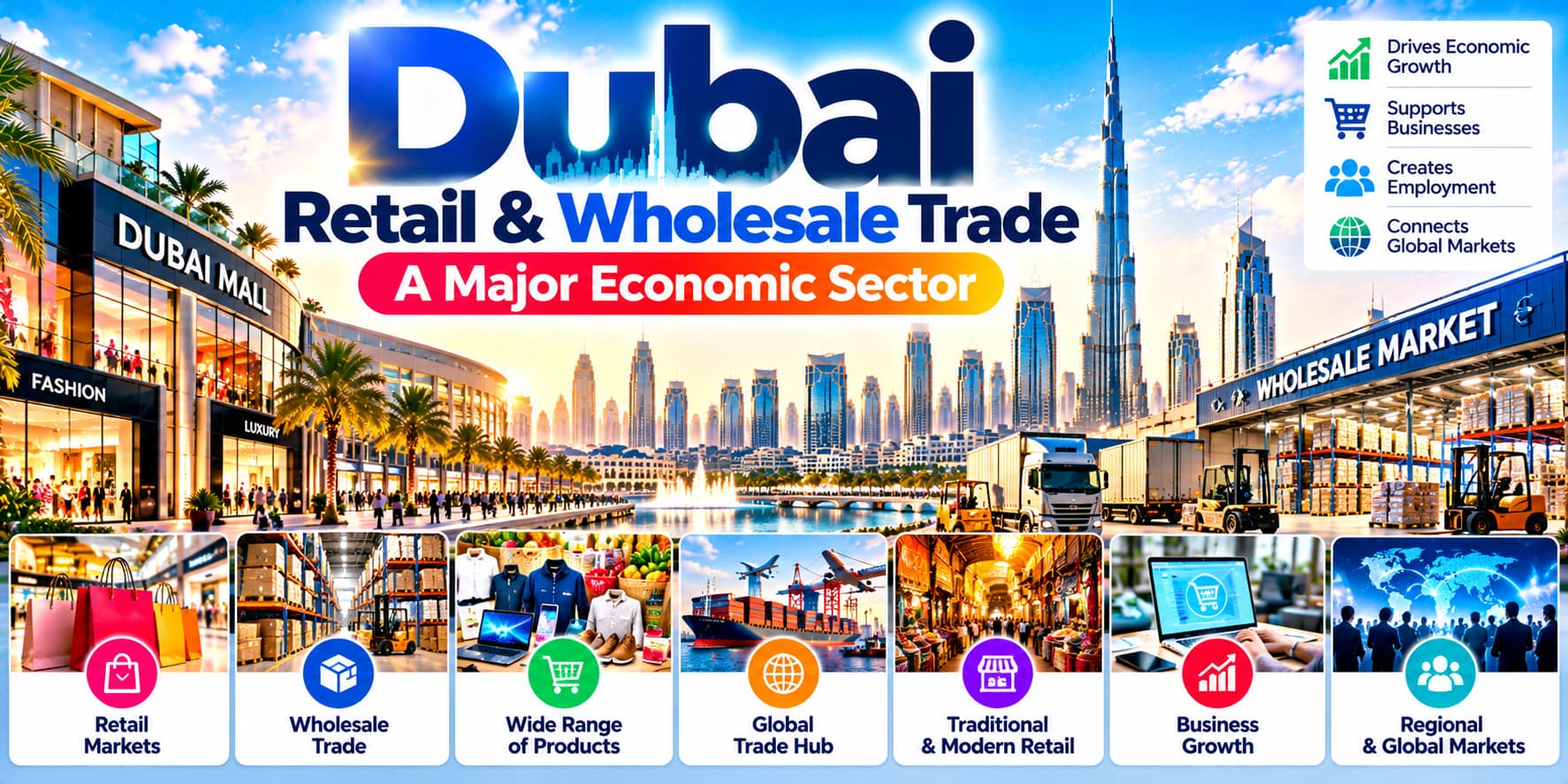
1. Dubai Retail & Wholesale Trade is a major pillar of the emirate’s economy, connecting international brands, local businesses, distributors, manufacturers and consumers. From large shopping malls and supermarkets to specialist stores and bulk trading companies, the sector supports commercial activity across a wide range of industries.
Dubai’s position as an international business destination, its diverse population, strong consumer demand and established commercial networks have helped the retail and wholesale sector grow. The industry serves residents, businesses and international visitors while also supporting employment, entrepreneurship and investment.
Wholesale and retail trade contributed approximately AED 50.9 billion in real gross value added during the first quarter of 2026, compared with AED 49.6 billion in the same period of 2025. This demonstrates the sector’s continuing economic importance.
The industry includes two closely connected activities: retail businesses sell products to end consumers, while wholesale businesses supply goods in larger quantities to retailers, companies and other commercial buyers.
2. Retail Trade vs Wholesale Trade
Retail and wholesale trade serve different customers, but both are essential to Dubai’s commercial ecosystem.
Retail Trade
Retail trade involves selling goods directly to individual consumers. Retailers purchase products from manufacturers, importers, wholesalers or authorised distributors and offer them through physical stores or other sales channels.
Examples include:
- Supermarkets and grocery stores
- Fashion and clothing outlets
- Electronics and home appliance retailers
- Furniture and home improvement stores
- Beauty, cosmetics and personal care shops
- Jewellery and luxury goods retailers
- Specialist stores selling sports equipment, toys and household products
Retail businesses compete through product quality, pricing, brand selection, customer service, store location and shopping convenience.
Dubai’s Manufacturing Industry: Industrial Growth & Future Production
Wholesale Trade
Wholesale trade focuses on supplying products in bulk to other businesses rather than primarily selling individual items to consumers. Wholesalers often purchase large quantities from manufacturers or international suppliers and distribute them to retailers, resellers, contractors and commercial organisations.
Common wholesale activities include:
- Importing and distributing consumer goods
- Supplying food products to supermarkets and restaurants
- Distributing electronics and household appliances
- Supplying construction materials to businesses
- Trading fashion, textiles and accessories
- Supplying industrial products and business equipment
Wholesale companies help businesses maintain stock availability, source products and manage purchasing requirements. They can also provide storage, product information, credit arrangements and after-sales support, depending on their business model.
Dubai Finance & Financial Services: DIFC, Banking & Investment
Dubai Technology & Innovation Economy: AI, ICT & Startups
3. Retail Industry in Dubai: Major Market Segments
The Retail Industry in Dubai includes businesses of different sizes, from independent shops and neighbourhood supermarkets to international retail chains and premium brand outlets.
Shopping Malls and Department Stores
Dubai’s shopping malls provide space for fashion brands, electronics retailers, restaurants, supermarkets, entertainment businesses and specialist stores. Large retail destinations attract a broad customer base and create opportunities for brands seeking visibility in the regional market.
Department stores and multi-brand retailers offer customers access to different product categories in one location. Their performance depends on consumer demand, brand selection, pricing and the overall shopping experience.
Supermarkets and Grocery Retail
Food retail is an essential part of Dubai’s consumer economy. Supermarkets, convenience stores, specialist food shops and other grocery retailers serve residents and businesses throughout the emirate.
This segment depends on reliable sourcing, stock management, product freshness, competitive pricing and consistent availability. Food retailers also work closely with importers, wholesalers and distributors to maintain supplies.
Dubai Employment & Workforce: Jobs, Skills & Global Talent
Fashion, Electronics and Consumer Goods
Fashion, footwear, electronics, household appliances, furniture and personal care products form important parts of the retail market. International brands operate alongside regional businesses and independent retailers.
Consumer demand varies according to purchasing power, seasonal preferences, product launches and competition. Retailers must therefore manage their product ranges and inventory carefully to avoid shortages or excess stock.
Luxury and Specialist Retail
Dubai also has a substantial premium retail segment, including designer fashion, watches, jewellery, cosmetics and high-value consumer products. Specialist retailers serve customers looking for particular brands, product expertise or premium service.
This segment is distinct from everyday retail because purchasing decisions may depend more heavily on brand reputation, exclusivity, product authenticity and customer relationships.
4. Wholesale Trade in Dubai: Distribution and Business Supply
Wholesale Trade in Dubai connects suppliers with retailers and commercial customers. Wholesalers help businesses purchase products in quantities suited to their operational needs rather than sourcing every item independently.
Importers and Distributors
Importers bring products into the market from international suppliers, while distributors manage the supply of products to retailers, resellers and other buyers. Some companies perform both functions.
Their activities may include supplier negotiations, product sourcing, inventory management, order processing and distribution agreements. Authorised distributors may also provide warranties, technical support or replacement services for particular product categories.
Business-to-Business Supply
Business-to-business, or B2B, trade enables companies to purchase goods required for resale or daily operations. For example, a supermarket may source products from a wholesaler, a hotel may purchase supplies through commercial distributors, and a contractor may procure materials from specialised suppliers.
Wholesale businesses can serve customers across several industries, including hospitality, food service, retail, construction and manufacturing. Their ability to offer dependable supply, suitable quantities and competitive commercial terms is important to business customers.
Bulk Purchasing and Inventory Management
Wholesale companies frequently operate with larger order volumes than retail businesses. They must balance purchasing costs, warehouse capacity, demand forecasts and stock availability.
Effective inventory management helps wholesalers reduce unnecessary storage costs, limit product losses and fulfil orders on time. For retailers, dependable wholesale supply makes it easier to maintain product availability and respond to changes in customer demand.
5. Major Product Categories in Dubai’s Trade Sector
Dubai’s retail and wholesale businesses handle a broad range of goods. The major categories include:
- Food and beverages: Groceries, packaged food, fresh products and supplies for food-service businesses.
- Fashion and textiles: Clothing, footwear, accessories, fabrics and related products.
- Electronics and appliances: Consumer electronics, mobile devices, computers and household appliances.
- Gold, jewellery and watches: Products sold through specialist retailers and commercial trading businesses.
- Construction and building materials: Materials, fittings, tools and equipment supplied to contractors and businesses.
- Home and lifestyle products: Furniture, home accessories, kitchenware and household goods.
- Beauty and personal care: Cosmetics, skincare products, fragrances and personal care items.
- Industrial and business supplies: Equipment, components, tools and other products used by commercial organisations.
The diversity of these categories allows Dubai’s trade sector to serve a wide range of consumer and business needs. Each category has different requirements for storage, product handling, quality control and customer service.
6. Traditional Markets and Modern Retail Formats
Dubai’s commercial environment includes traditional trading markets as well as modern retail destinations. These formats serve different customer groups and business requirements.
Traditional markets and specialist trading areas support established commercial relationships and provide access to particular product categories. Modern shopping centres, supermarkets and branded outlets focus on organised retail spaces, broader product selection and structured customer experiences.
Both formats contribute to the wider trading ecosystem. Their coexistence allows consumers and business buyers to choose between different locations, product ranges, price points and purchasing experiences.
The economic significance of these markets lies in their commercial activity, employment and connections with suppliers. Their role should be understood as part of Dubai’s wider retail and wholesale economy rather than only as shopping destinations.
7. Dubai Retail Market and International Business Connections
The Dubai Retail Market benefits from the emirate’s international business environment. Companies can serve a diverse population while building commercial relationships with suppliers, brands and buyers from different countries.
International brands may use Dubai to reach regional customers, establish retail operations or develop partnerships with local distributors. Regional businesses can also use the market to expand their product ranges and strengthen their commercial networks.
Wholesale companies benefit from relationships with manufacturers, importers, retailers and institutional buyers. These connections help businesses source products and develop sales opportunities across multiple customer segments.
Retail and wholesale trade also interact with other parts of Dubai’s economy. Retail demand supports property owners, shopping centre operators, marketing agencies and service providers. Wholesale activity supports retailers and businesses that require regular product supplies.
Although trade is closely connected with transportation and distribution, its economic role extends beyond moving goods. It also includes purchasing decisions, brand management, customer service, pricing, commercial relationships and the sale of products.
8. Digital Transformation and Dubai Traders
Digital tools are changing how retailers and wholesalers manage products, communicate with customers and develop business relationships.
Retailers increasingly use digital catalogues, online product information, inventory systems and customer management tools. Wholesalers can use digital ordering and business platforms to display product ranges, receive enquiries and improve communication with commercial buyers.
Dubai’s government-backed Dubai Traders initiative supports the development of digital commerce. The programme has worked with major consumer-facing platforms, including noon and Amazon, and expanded into B2B and wholesale opportunities through a partnership with Tradeling.
Such initiatives can help eligible businesses improve their digital presence, connect with customers and explore additional sales channels. Their practical value depends on a company’s products, readiness, commercial requirements and ability to manage digital orders effectively.
Digitalisation does not eliminate the need for physical stores, warehouses or established supplier relationships. Instead, it gives businesses additional ways to reach customers, manage information and support their operations.
9. Consumer Demand and Retail Business Performance
Consumer demand is one of the main factors influencing retail activity in Dubai. Population needs, household spending, purchasing preferences, seasonal demand and competition can all affect sales.
Retailers must understand their customers and choose product ranges that match local requirements. Pricing, product availability, service quality and store convenience influence purchasing decisions.
Wholesale demand is closely connected to the performance of retailers and commercial customers. When businesses increase their sales or expand their operations, they may require more products from suppliers. Changes in customer demand can also lead retailers to reduce orders or adjust their inventory.
Retailers and wholesalers therefore need to monitor sales trends and purchasing patterns. Businesses that use reliable data to plan stock levels, negotiate with suppliers and control operating costs are better positioned to respond to changing market conditions.
10. Challenges Facing Retailers and Wholesalers in Dubai
Despite the sector’s economic importance, businesses face several commercial challenges.
Strong Competition
Retailers compete with international brands, local businesses, specialist stores and alternative sales channels. Wholesalers must compete on product availability, pricing, service quality and reliability.
Businesses need a clear market position and a strong understanding of their target customers.
Operating and Inventory Costs
Retailers may face expenses related to commercial premises, staffing, stock and store operations. Wholesalers must also manage purchasing costs, storage requirements and unsold inventory.
Poor stock planning can tie up working capital and reduce profitability.
Pricing and Profit Margins
Customers often compare prices across different businesses. Retailers must balance competitive pricing with the costs of operating their stores, while wholesalers need to maintain sustainable margins across bulk orders.
Discounting can attract buyers, but businesses must understand its impact on profitability.
Changing Consumer Preferences
Product trends and customer expectations can change quickly. Retailers that fail to adjust their offerings may struggle to maintain demand. Wholesalers must also respond when their business customers change suppliers, product ranges or purchasing volumes.
Supply and Product Management
Businesses need reliable suppliers and accurate inventory information. Delays, inconsistent product quality or poor demand forecasting can affect customer satisfaction and sales.
Maintaining supplier relationships, checking product quality and planning purchases carefully are important for both retailers and wholesalers.
11. Future of Dubai Retail & Wholesale Trade
The future of Dubai’s retail and wholesale sector will be shaped by changing customer expectations, digital adoption, competition and business efficiency.
Several developments are likely to remain important:
- Integrated retail operations: Businesses may combine physical stores with digital product discovery, customer communication and ordering tools.
- Digital B2B trade: Wholesalers may increasingly use digital catalogues and ordering platforms to connect with retailers and commercial buyers.
- Data-driven decisions: Sales information and demand forecasting can help businesses improve purchasing, pricing and inventory planning.
- Customer-focused retail: Product selection, convenience, service quality and reliable after-sales support will remain important competitive factors.
- Efficient business operations: Better stock control, supplier coordination and cost management can help retailers and wholesalers protect their margins.
- Market diversification: Businesses may explore new customer segments, product categories and regional commercial relationships.
These developments do not guarantee success for every business. Results will depend on execution, investment, customer demand and the ability to adapt to market conditions.
Dubai’s established commercial environment provides a strong foundation for retailers, wholesalers, distributors and international brands. Businesses that combine market knowledge with reliable operations and customer-focused strategies can position themselves to benefit from the sector’s continued development.
Conclusion
Dubai Retail & Wholesale Trade is a major component of the emirate’s economic structure. Retailers connect products with consumers, while wholesalers and distributors supply the goods that retailers and commercial organisations need to operate.
The sector covers a broad range of products, supports employment and business activity, and connects local demand with international brands and suppliers. Digital initiatives, changing consumer expectations and improved business operations are also influencing how companies compete.
As Dubai continues to develop its role as an international commercial destination, retail and wholesale trade will remain important to its business environment and wider economic growth.












Dubai Technology & Innovation Economy: AI, ICT & Startups
[…] Dubai Retail & Wholesale Trade: A Major Economic Sector […]