
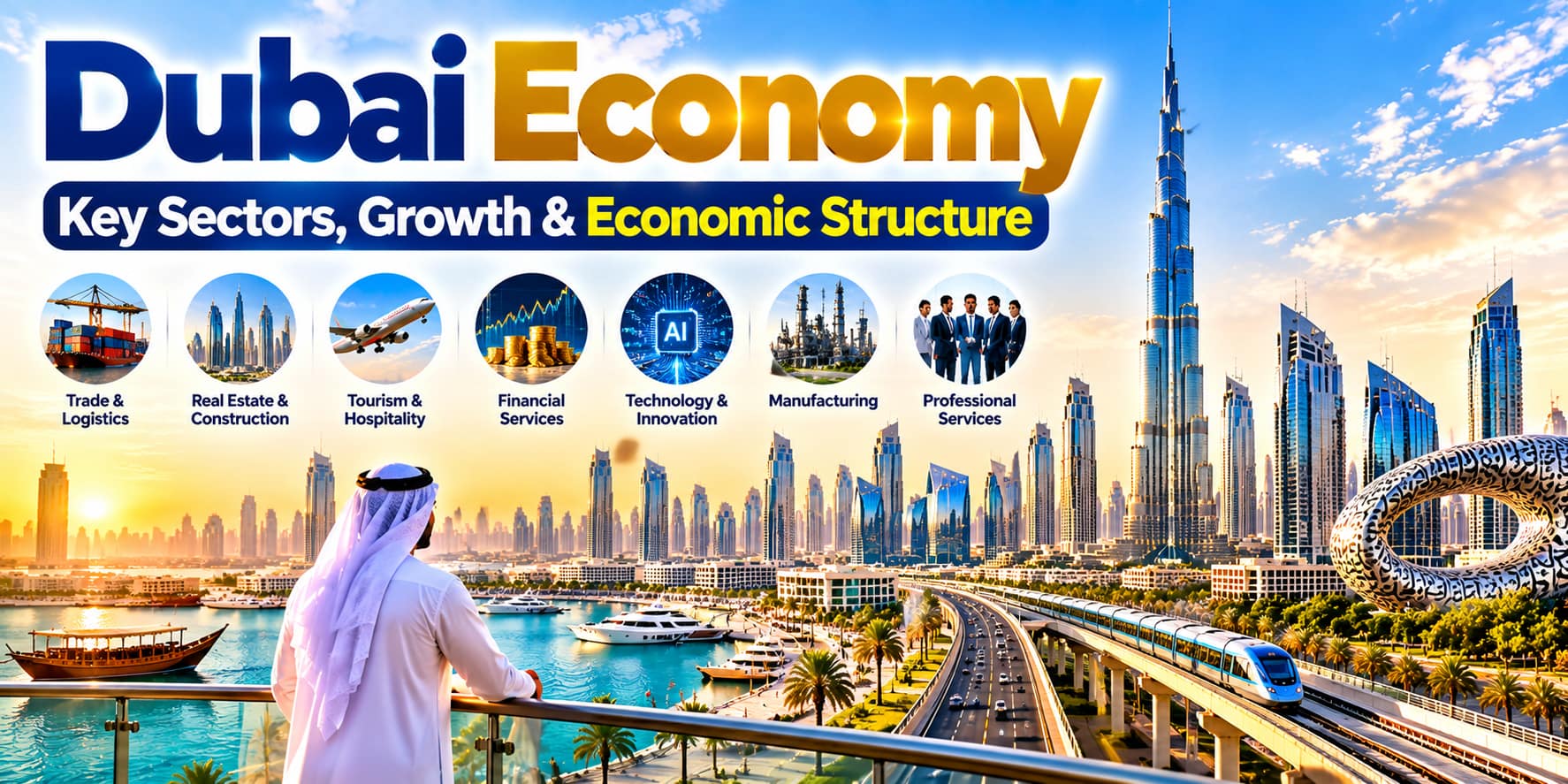
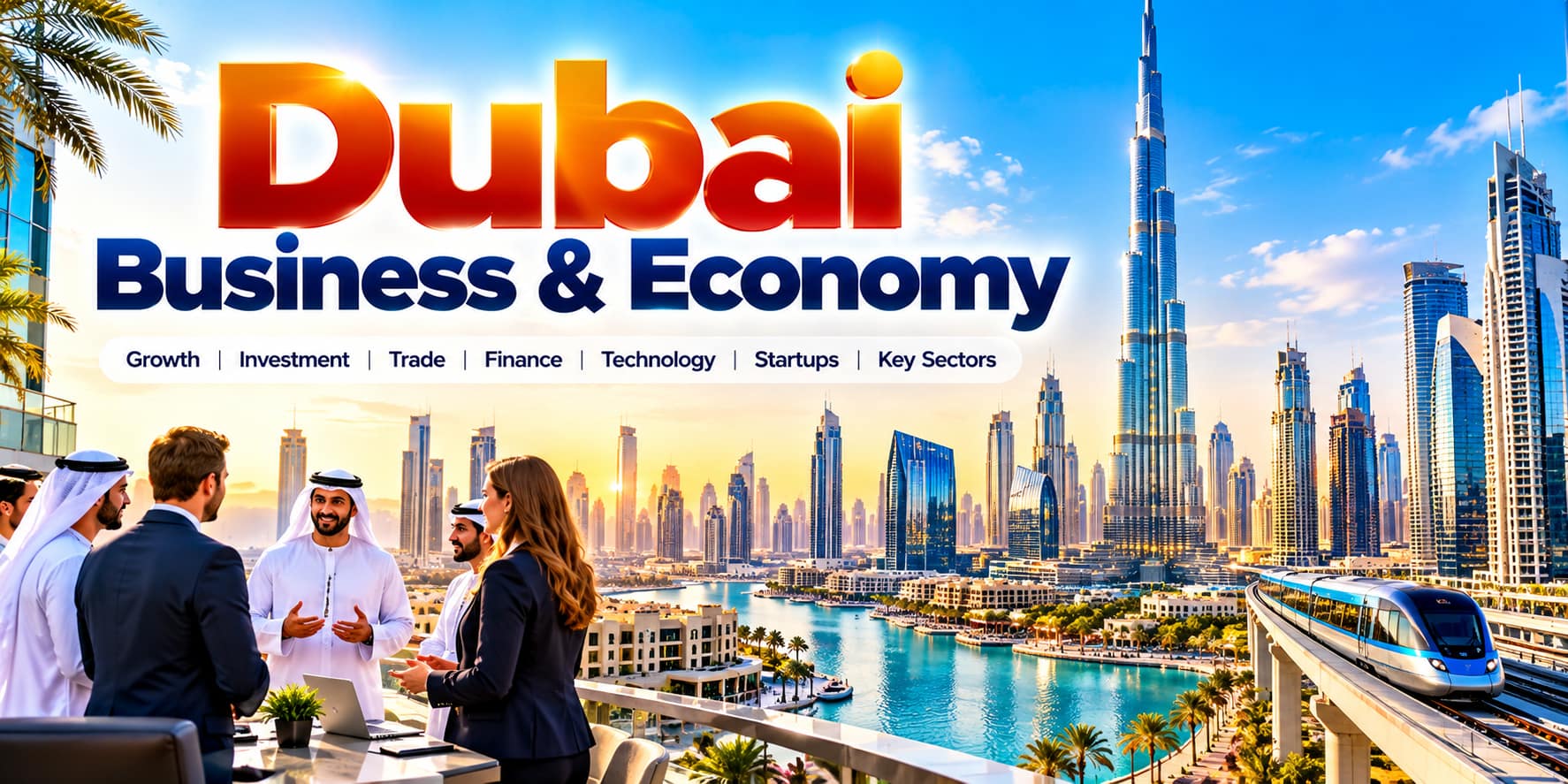
Dubai Economy has evolved into one of the most diversified economies in the Middle East, supported by trade, tourism, real estate, finance, transportation, technology, manufacturing and professional services. Unlike economies that depend heavily on a single industry, Dubai has built a broad economic structure designed around international business, investment, trade and services.
The growth of Dubai has also been closely connected to its strategic location, world-class infrastructure and ability to attract companies, investors, entrepreneurs and international talent.
Starting a Business in Dubai: Mainland, Free Zone & Business Setup
What Is the Economic Structure of Dubai?
The economic structure of Dubai is based on a diverse mix of industries and services. Trade, transportation, real estate, financial services, tourism, manufacturing and information technology all play important roles.
This diversification has helped Dubai develop an economy that is closely connected to international markets.
Dubai Free Zones: Major Zones, Industries & Business Benefits
Dubai Trade & Logistics: How the City Connects Global Markets
The major areas of the Dubai economy include:
- Wholesale and retail trade
- Real estate and construction
- Transportation and logistics
- Financial services
- Tourism and hospitality
- Manufacturing
- Information and communications
- Professional and business services
- Technology and innovation
- Healthcare and education
- Entertainment and events
Each sector contributes differently to economic activity, employment and investment.
How Has the Dubai Economy Grown?
Dubai’s economic growth has been driven by long-term investment in infrastructure, international connectivity and economic diversification.
The emirate developed from a regional trading centre into a major international business and tourism destination. Ports, airports, roads, financial districts, free zones and large commercial developments helped create the infrastructure needed for this transformation.
Why Is Dubai a Global Business Hub?
Today, Dubai’s economy is supported by a combination of established industries and newer growth sectors.
Is Dubai’s Economy Dependent on Oil?
Dubai is part of the oil-producing UAE, but its economy is far more diversified than an economy primarily dependent on oil revenues.
Oil and gas remain part of Dubai’s wider economic landscape, but major non-oil sectors such as trade, real estate, transportation, tourism, finance, manufacturing and technology play much larger roles in the emirate’s economic activity.
This diversification has been a central part of Dubai’s economic development strategy.
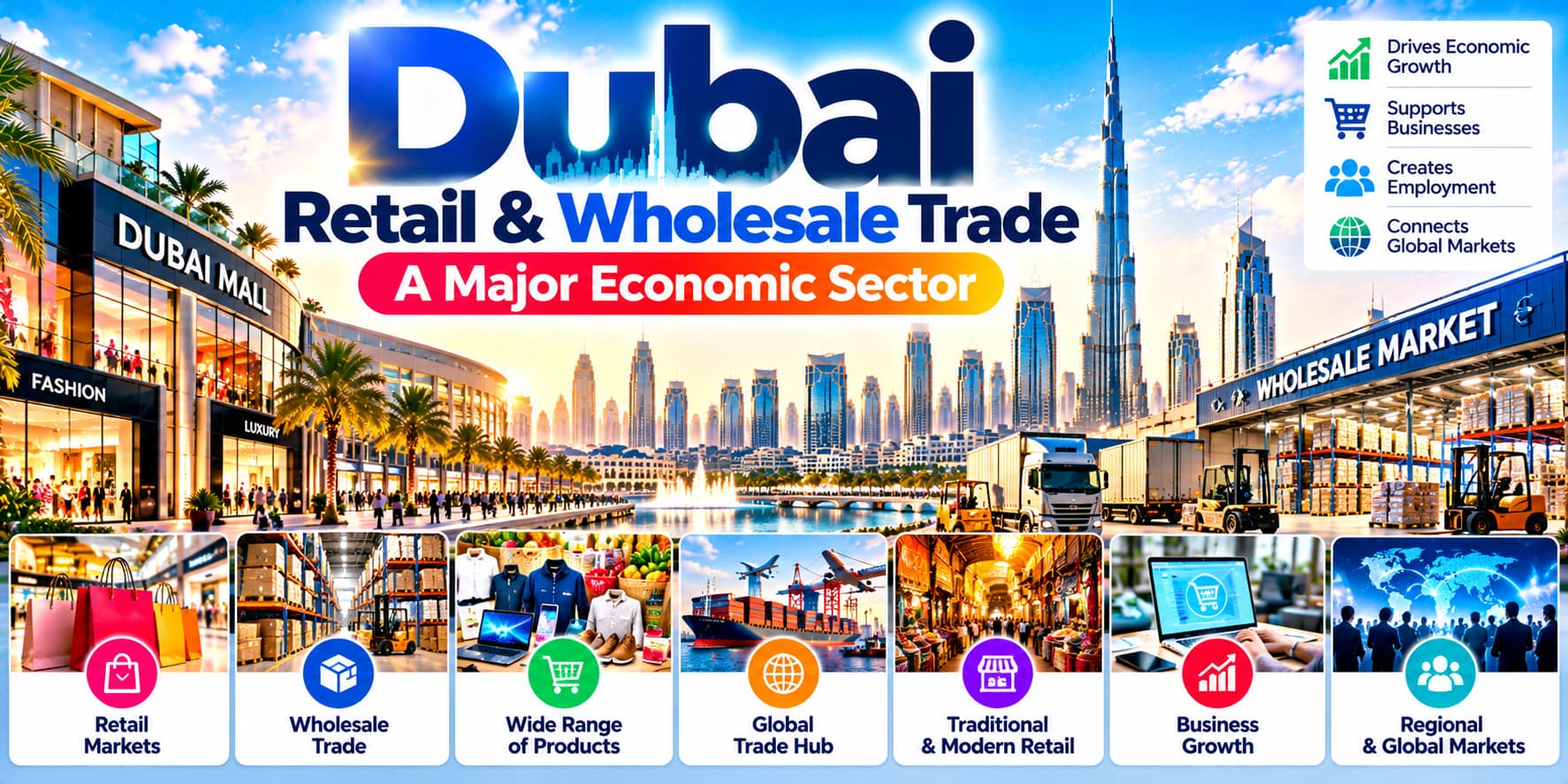
Wholesale and Retail Trade in Dubai
Wholesale and retail trade is one of the most important Dubai economic sectors.
Dubai’s location between major markets, international population and tourism industry have created strong demand for retail and commercial trade.
The sector includes:
- Wholesale distribution
- Shopping malls
- Traditional markets
- Luxury retail
- Consumer goods
- Electronics
- Fashion
- Automotive products
- E-commerce
- International trading businesses
Dubai’s retail industry also benefits from international visitors and major shopping and business events.
Real Estate and Construction
Real estate and construction have played a major role in Dubai’s transformation.
The development of residential communities, commercial towers, hotels, shopping centres, infrastructure projects and large-scale destinations has created a substantial real estate ecosystem.
The sector includes:
- Residential property
- Commercial real estate
- Hospitality developments
- Construction
- Property management
- Real estate investment
- Infrastructure development
Dubai’s property market also attracts international investors, developers and businesses.
Transportation and Logistics
Transportation and logistics are fundamental to the Dubai economy.
Dubai’s airports, seaports, highways and logistics facilities connect the emirate with international markets.
The sector includes:
- Aviation
- Airports
- Seaports
- Shipping
- Freight
- Warehousing
- Supply chain management
- Road transport
- Logistics services
Dubai’s position between Europe, Asia and Africa has helped establish it as an important global logistics and trade centre.
Financial Services in Dubai
Financial services are another major component of Dubai’s economy.
The emirate has developed a sophisticated financial ecosystem serving local businesses, international companies and investors.
The sector includes:
- Banking
- Investment
- Asset management
- Insurance
- Wealth management
- Financial technology
- Capital markets
- Corporate finance
The Dubai International Financial Centre has also strengthened the city’s position as a regional financial centre connecting businesses and capital with international markets.
Tourism and Hospitality
Tourism is one of the most visible parts of Dubai’s diversified economy.
Hotels, restaurants, attractions, aviation, shopping, entertainment and events all contribute to the wider tourism ecosystem.
Dubai attracts visitors for:
- Leisure
- Shopping
- Business travel
- Conferences
- Events
- Luxury tourism
- Family holidays
- Cultural experiences
- Desert tourism
- Cruise tourism
Tourism also supports other industries because visitor spending reaches hotels, restaurants, transportation, retail and entertainment businesses.
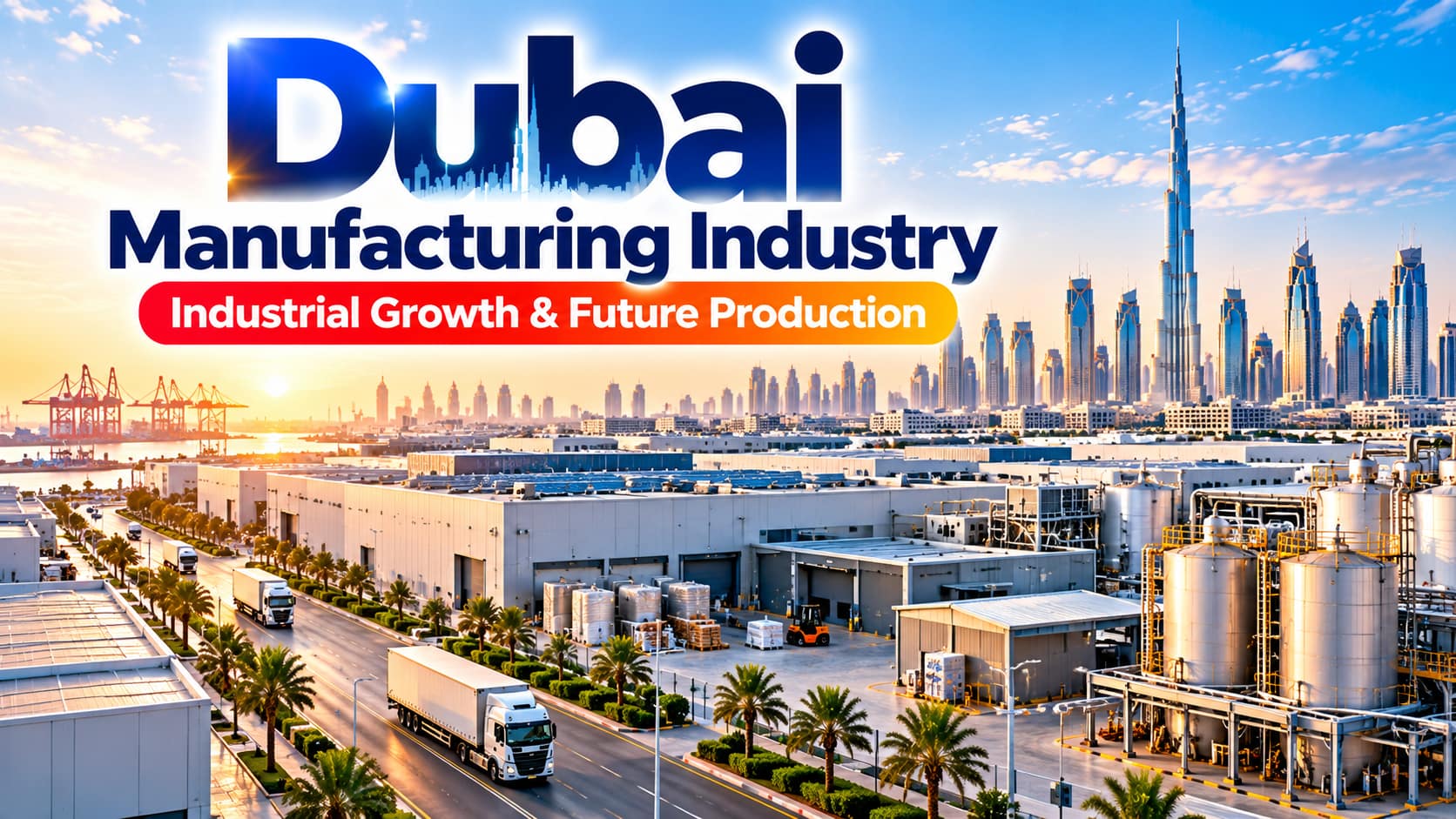
Manufacturing in Dubai
Manufacturing is an important part of Dubai’s economic diversification.
Industrial areas and specialised business zones support companies involved in producing and processing a variety of goods.
Manufacturing activities can include:
- Food and beverages
- Construction materials
- Chemicals
- Machinery
- Consumer products
- Metal products
- Industrial equipment
- Packaging
The sector also benefits from Dubai’s logistics infrastructure and access to regional markets.
Technology and Information Economy
Technology has become increasingly important to Dubai’s economic development.
The Dubai economy is expanding beyond traditional sectors into digital and technology-driven industries.
Important areas include:
- Artificial intelligence
- Fintech
- E-commerce
- Cloud services
- Digital platforms
- Cybersecurity
- Software
- Telecommunications
- Data services
- Smart-city technologies
Dubai’s focus on digital transformation is also creating opportunities for technology companies, startups and international investors.
Dubai’s Startup and Entrepreneurship Economy
Entrepreneurship is another growing part of the economic structure.
Dubai has attracted founders and entrepreneurs from different countries who establish businesses across technology, professional services, retail, hospitality, e-commerce and other industries.
The startup ecosystem is supported by:
- Business incubators
- Accelerators
- Investment networks
- Free zones
- Technology communities
- Financial services
- International business connections
This entrepreneurial activity contributes to economic diversification and creates new employment opportunities.
Professional and Business Services
Professional services support almost every major industry in Dubai.
This part of the economy includes:
- Consulting
- Legal services
- Accounting
- Marketing
- Advertising
- Management services
- Engineering
- Architecture
- Corporate services
- Business advisory
The growth of international companies in Dubai has increased demand for specialised professional services.
Healthcare and Education
Healthcare and education are also becoming increasingly important to Dubai’s economy.
Population growth, international residents and demand for high-quality services have encouraged investment in hospitals, clinics, schools, universities and specialised education and healthcare facilities.
These sectors also support Dubai’s development as a long-term destination for residents, professionals and international families.
Dubai’s Economic Growth and Global Connectivity
One of the biggest strengths of Dubai’s economic model is its international connectivity.
Businesses operating in Dubai can connect with customers, suppliers, investors and partners across multiple regions.
Air connectivity, maritime trade, logistics infrastructure and digital networks all contribute to this international economic role.
This is one reason Dubai has become an important base for companies seeking access to Middle Eastern, Asian, African and European markets.
What Drives Dubai Economic Growth?
Several factors continue to support Dubai economic growth:
Strategic Location
Dubai’s location gives businesses access to major international markets.
Infrastructure
Airports, ports, roads, commercial districts and digital infrastructure support economic activity.
Business Environment
Different business structures, free zones and specialised commercial areas provide options for companies across many industries.
International Investment
Foreign companies and investors contribute capital, expertise and new business activity.
Economic Diversification
A broad range of sectors reduces dependence on one industry and creates multiple sources of growth.
International Talent
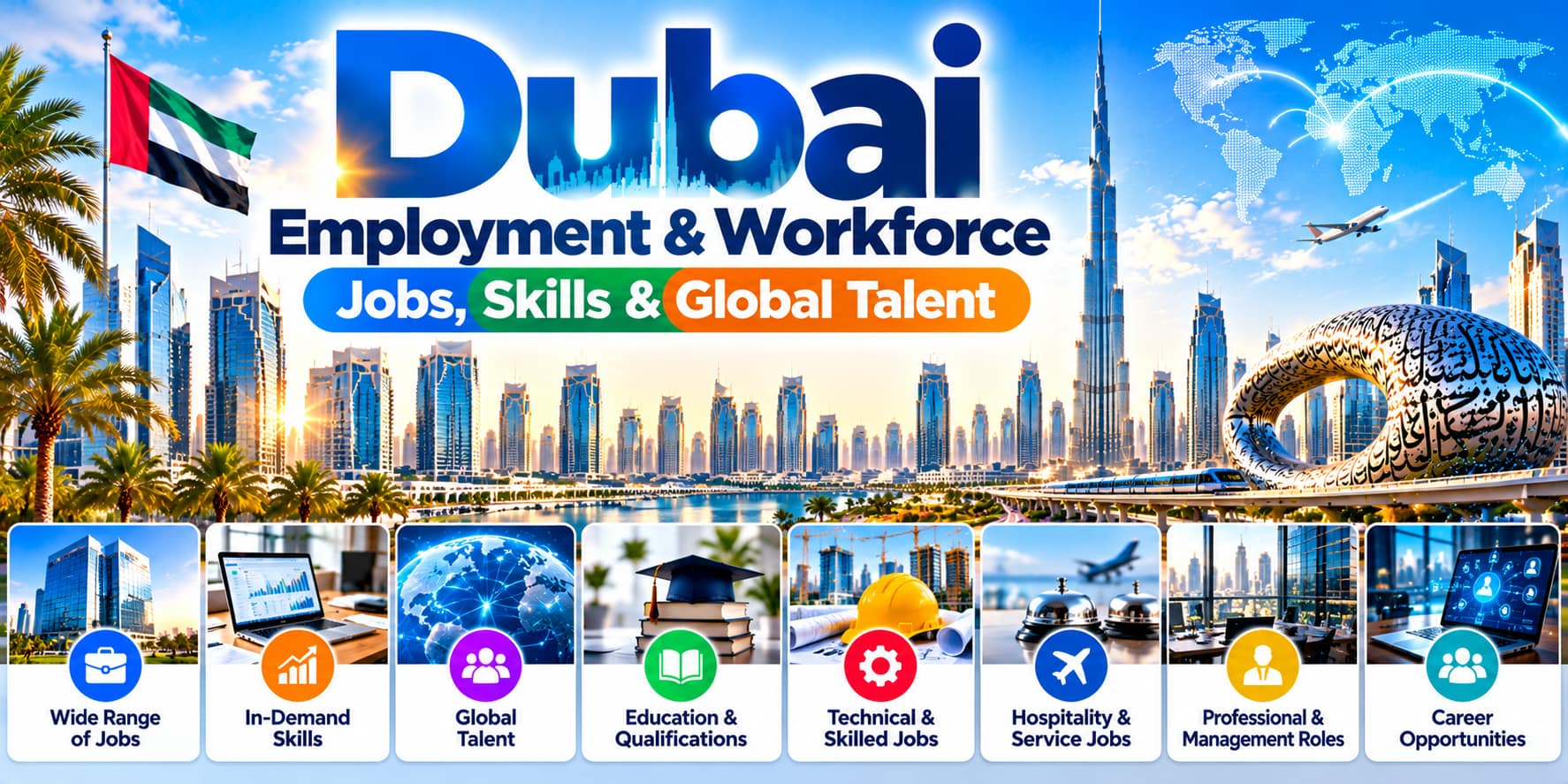
Dubai’s multicultural workforce provides businesses with access to professionals from around the world.
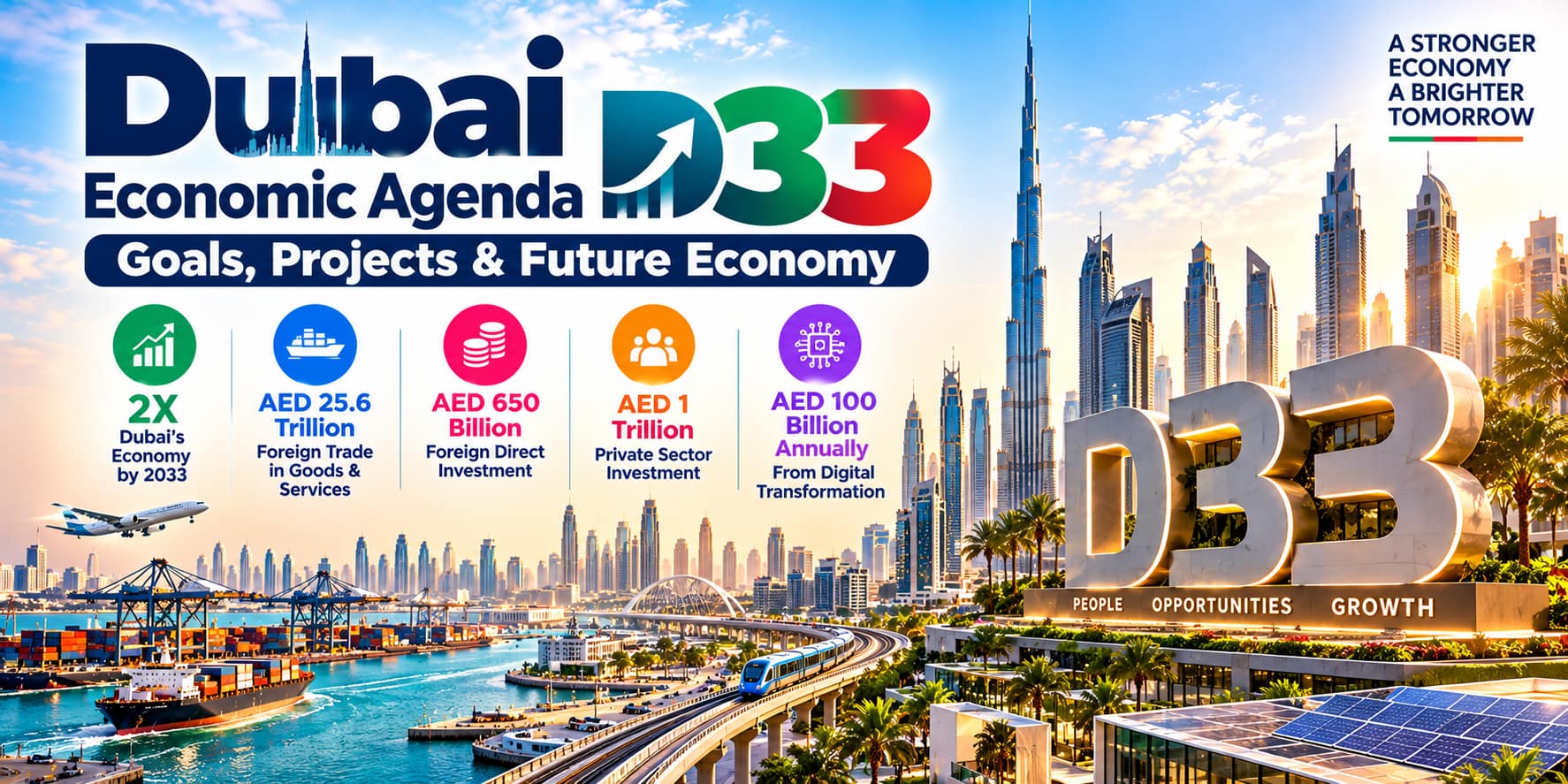
Dubai Economic Agenda D33
Dubai’s long-term economic development is also guided by the Dubai Economic Agenda D33.
The agenda focuses on strengthening Dubai’s position as a major global business and investment centre while supporting innovation, entrepreneurship, economic growth and international competitiveness.
Its broader direction reflects Dubai’s ambition to build an economy that is increasingly connected to technology, investment, global trade and future industries.
What Are the Key Sectors of the Dubai Economy?
The main key sectors of the Dubai economy can be summarised as:
- Wholesale and retail trade
- Real estate and construction
- Transportation and logistics
- Financial services
- Tourism and hospitality
- Manufacturing
- Technology and information
- Professional services
- Healthcare
- Education
- Entertainment and events
- Entrepreneurship and startups
Together, these sectors create a broad economic ecosystem rather than a single-industry economy.
The Future of Dubai’s Economy
The future of the Dubai economy is likely to be shaped by both established industries and emerging sectors.
Trade, finance, tourism, real estate and logistics will remain important, while technology, artificial intelligence, digital business, advanced services and innovation are expected to become increasingly significant.
Continued investment in infrastructure and international business connectivity will also support Dubai’s position in the global economy.
Dubai Economy: A Diversified Global Economic Model
The Dubai Economy is the result of decades of diversification, infrastructure development and international economic integration.
Trade, real estate, logistics, finance, tourism, manufacturing and technology form the foundation of the emirate’s economic structure, while newer industries are creating additional opportunities for growth.
Dubai’s ability to connect different industries with international markets has helped transform it into a major global business and investment centre. As the emirate continues developing its future-focused economy, diversification will remain one of the key strengths behind its long-term economic growth.




Why Is Dubai A Global Business Hub? Key Reasons
[…] Dubai Economy: Key Sectors, Growth & Economic Structure […]