

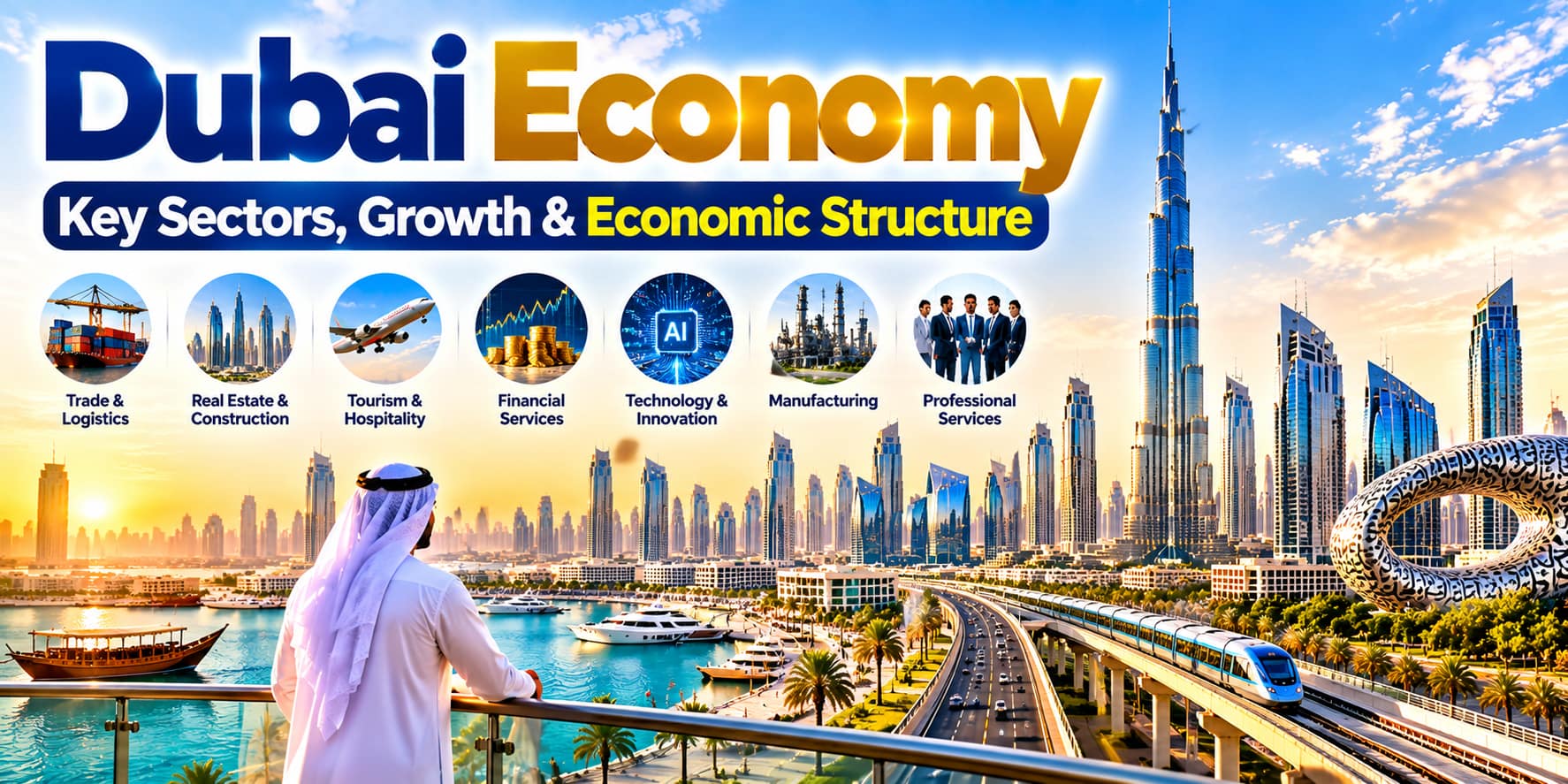
Dubai Professional Services & Knowledge Economy represents an important part of the emirate’s transition towards an economy driven by expertise, innovation, specialised skills and high-value services. Alongside trade, tourism, finance and other established industries, Dubai has developed a business environment where companies rely on professional knowledge to solve complex problems, manage international operations and improve productivity.
This sector includes management consulting, legal and accounting services, engineering consultancy, research, design, digital expertise and other knowledge-intensive activities. These services support businesses across industries, helping them make informed decisions, manage risks, develop new products and operate in international markets.
Understanding Dubai’s professional services sector also provides insight into the wider knowledge economy: an economic system in which expertise, information, technology and specialised skills contribute significantly to business value and productivity.
What Is the Knowledge Economy in Dubai?
A knowledge economy is an economic system in which knowledge, skills, innovation and information play a central role in creating value. Instead of relying primarily on physical production or the sale of goods, knowledge-based businesses often generate revenue through expertise, intellectual property, specialised services and technology.
In Dubai, the knowledge economy includes professional service providers, technology companies, research activities, specialist consultancies and businesses that use advanced skills to serve clients locally and internationally.
For example, an engineering consultancy may provide technical expertise for a major infrastructure project, while a data analytics firm may help an international company understand customer behaviour. Both businesses create value through specialised knowledge rather than simply selling physical products.
Dubai’s wider economic strategy places importance on innovation, advanced technology, productivity and talent development. These priorities support the growth of knowledge-intensive activities across different industries.
However, the knowledge economy is broader than the technology sector alone. Legal advice, accounting, architecture, scientific research, professional training and business strategy can all contribute when expertise is central to the service being delivered.
Foreign Investment in Dubai: FDI, Investors & Global Companies
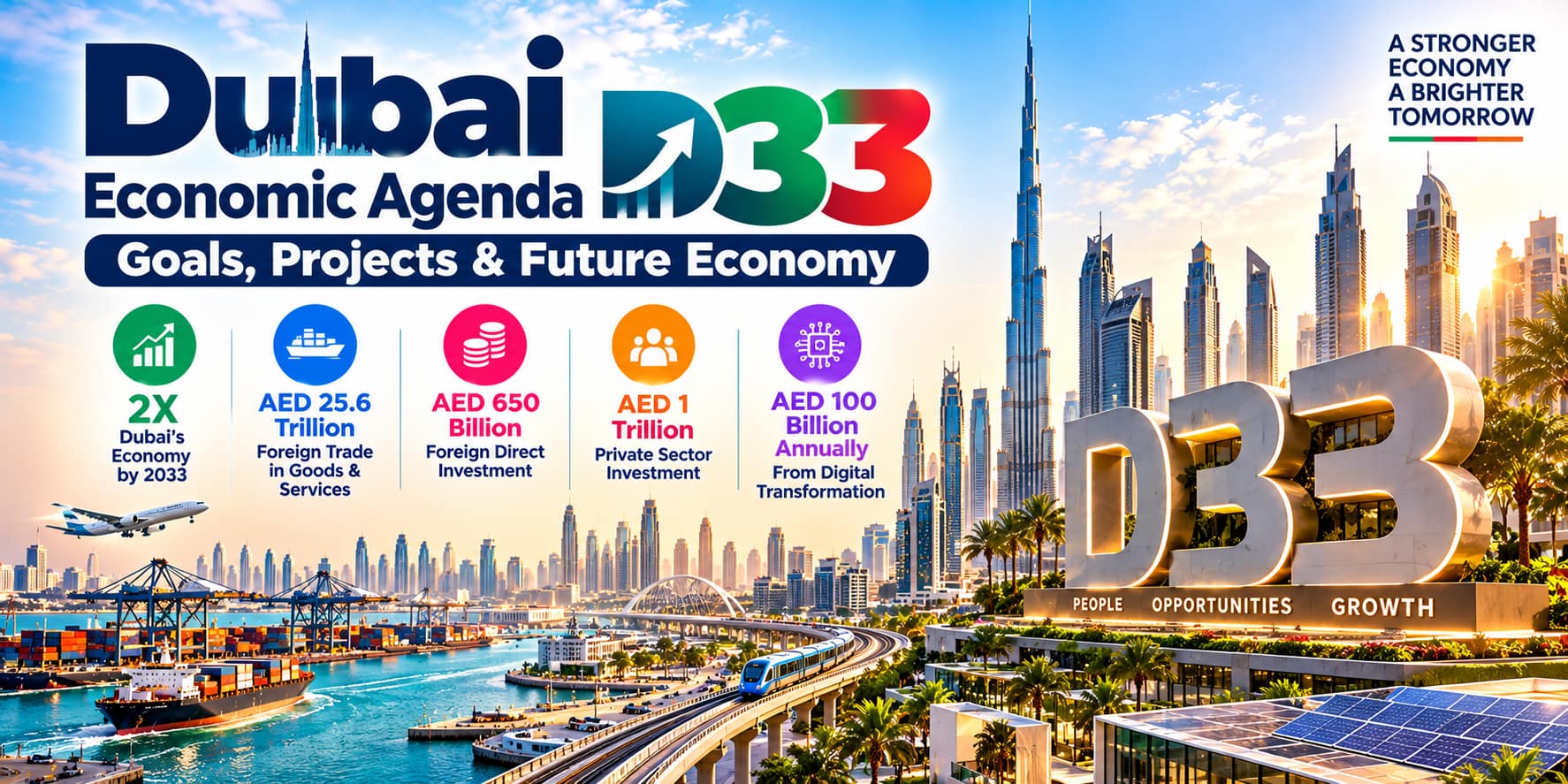
Dubai Economic Agenda D33: Goals, Projects & Future Economy
Major Professional Services in Dubai
Dubai’s professional services sector includes a diverse range of businesses that provide specialised expertise to companies, investors, institutions and individuals.
Management Consulting and Business Advisory
Management consulting firms help organisations evaluate business performance, improve operations, develop strategies and respond to changing market conditions.
Their work can include operational reviews, organisational planning, performance improvement, risk assessment and advice on entering new markets.
Dubai’s international business environment creates demand for advisers who understand different industries and cross-border commercial relationships. Companies expanding across the Middle East, Africa and Asia may need support coordinating operations, managing regional teams and adapting business strategies to different markets.
Dubai Entrepreneurship & Startup Ecosystem: Key Hubs, Accelerators & Founder Support
The value of management consulting depends on the quality of its analysis and the practical results it helps clients achieve. Businesses increasingly expect recommendations supported by reliable information, measurable objectives and a clear implementation plan.
Legal Services and Regulatory Advisory
Legal professionals help businesses understand contractual obligations, commercial disputes, corporate governance, intellectual property and other legal matters.
Dubai’s international business community creates demand for expertise in commercial law, cross-border transactions, dispute resolution and regulatory compliance.
Companies operating across jurisdictions may need to understand how different legal systems affect their contracts, business relationships and commercial responsibilities.
Legal services can also support intellectual property protection, employment matters and the interpretation of industry-specific rules.
Certain legal activities are subject to professional qualifications, authorisation or regulatory requirements. The services a firm can provide depend on the applicable rules and the qualifications of its professionals.
Accounting, Audit and Financial Advisory
Accounting and financial advisory services help organisations maintain accurate financial records, evaluate performance and meet applicable reporting obligations.
Common services include bookkeeping, financial reporting, audit, tax advisory, budgeting, transaction support and financial planning.
As businesses grow, reliable financial information becomes increasingly important. Owners and management teams need to understand revenue, costs, cash flow, liabilities and financial risks before making decisions about expansion.
International companies may also need expertise in cross-border transactions, transfer pricing, group reporting and tax compliance.
These services contribute to the wider knowledge economy because they turn financial information into practical insight that supports business decisions. Audit, tax and other regulated activities may require specific professional qualifications or approvals.
Engineering and Technical Consultancy
Engineering consultancies apply specialised technical knowledge to construction, infrastructure, industrial operations, energy systems and other complex projects.
Their services may include design reviews, project planning, technical assessments, quality assurance, environmental analysis and infrastructure-related advice.
Dubai’s built environment and ongoing development activities create demand for technical expertise across multiple disciplines. Engineering knowledge can also support energy efficiency, industrial productivity and the adoption of advanced technologies.
Technical consultancy requires more than general business knowledge. Depending on the activity, professionals may need recognised qualifications, technical experience and relevant approvals.
Architecture, Design and Creative Professional Services
Architecture, interior design, industrial design and other creative professional services combine technical expertise with practical and aesthetic problem-solving.
Businesses may engage these professionals to develop buildings, improve commercial spaces, create product concepts or strengthen brand experiences.
Dubai’s property, hospitality, retail and entertainment sectors create different requirements for design expertise. Companies may also seek design services to improve digital products, customer experiences and business communication.
As digital tools become more advanced, design firms increasingly combine creative judgement with data, software and collaborative workflows.
Human Resources and Talent Advisory
Human resources consultancies help organisations recruit employees, assess skills, improve workforce planning and develop professional capabilities.
Their services may include executive search, recruitment support, organisational development, performance management and training.
For companies operating internationally, talent advisory can be especially valuable when teams include people from different professional and cultural backgrounds.
Businesses also need to understand applicable employment rules, workforce requirements and professional responsibilities. Recruitment, employment placement and related activities may be subject to specific regulatory conditions.
Technology and Digital Expertise in the Knowledge Economy
Technology has changed how professional services are delivered. Many firms now combine human expertise with digital tools to improve speed, accuracy and the quality of their work.
Artificial Intelligence and Data Analytics
AI and data analytics can help professional firms process information, identify patterns and support decision-making.
Consultancies may use analytics to assess business performance, while financial professionals may use digital tools to organise records and identify unusual transactions. Engineering and design teams can also use advanced software to model projects and test different scenarios.
The greatest value comes when technology addresses a clear business problem. Automated outputs still require appropriate review, particularly where decisions involve legal obligations, financial risk, confidential information or public safety.
Cloud Computing and Digital Collaboration
Cloud-based systems allow professional teams to access authorised information, collaborate across locations and manage projects more efficiently.
This is relevant to consulting firms, accounting practices, engineering teams and international companies coordinating work across multiple offices.
Digital collaboration can reduce geographical barriers, although businesses still need suitable access controls, cybersecurity measures, data-management practices and reliable systems.
Cybersecurity and Data Protection Services
Businesses increasingly depend on digital systems to store information, communicate with customers and manage operations.
Cybersecurity specialists help organisations assess vulnerabilities, strengthen security controls, respond to incidents and improve their resilience.
Data protection advisers may also help companies understand their responsibilities when collecting, storing or processing personal and commercial information.
Demand for these services can arise across many industries because digital risk is not limited to technology companies. The applicable legal and regulatory requirements depend on the organisation, its activities and the data it handles.
Dubai’s Knowledge and Innovation Hubs
Dubai’s professional and knowledge-intensive businesses operate within a wider network of commercial districts, specialised communities and innovation-focused environments.
These locations can bring together companies, skilled professionals, technology providers and potential business partners.
Dubai International Financial Centre
Dubai International Financial Centre (DIFC) is an important financial and professional business environment.
Alongside financial institutions, its ecosystem includes legal advisers, consulting firms, specialist service providers and businesses supporting financial-sector operations.
This concentration of expertise can be relevant to companies seeking professional services connected with finance, investment, risk management and international commercial activity.
DIFC has its own legal and regulatory framework for relevant activities within its jurisdiction. Firms should confirm which rules apply to their specific operations.
Dubai Internet City
Dubai Internet City is a technology-focused business community associated with digital innovation and the ICT sector.
Technology companies and related professional service providers operating in this environment can develop relationships around software, digital transformation, enterprise technology and other technology-related services.
Its relevance to the knowledge economy extends beyond software development. Technology expertise can support consulting, business operations, customer services and the digital transformation of companies in other industries.
Dubai Silicon Oasis
Dubai Silicon Oasis is an innovation and technology-oriented economic zone within Dubai’s integrated economic development environment.
It supports a business ecosystem associated with technology, entrepreneurship, innovation and knowledge-based activities.
In January 2026, strategic expansion projects valued at AED 12.8 billion were announced for Dubai Silicon Oasis. The announcement reinforced its role within Dubai’s knowledge economy and innovation ecosystem.
Such developments illustrate the importance of specialised environments for technology-led economic activity. However, individual businesses should evaluate the facilities, services and programmes relevant to their own requirements rather than assuming every benefit applies to every company.
Dubai Design District
Dubai Design District, also known as d3, provides a specialised environment for design, creative businesses and related professional communities.
Its ecosystem is relevant to architecture, fashion, product design, creative technology and other activities that rely on specialised ideas and skills.
Creative services are an important part of the knowledge economy because intellectual input, original concepts and professional expertise can create commercial value across different industries.
How Professional Services Support Other Industries in Dubai
Professional services are not isolated from the rest of the economy. They provide expertise that enables other businesses to operate more effectively.
Support for Real Estate and Construction
Property developers and construction companies may rely on architects, engineers, project managers, legal advisers, accountants and specialist consultants.
These professionals help with planning, technical design, project coordination, financial assessment and risk management.
Their work contributes to the delivery and management of complex projects, although the responsibilities of each professional depend on the project and applicable regulations.
Support for International Trade and Logistics
Trade and logistics companies need expertise in contracts, financial reporting, technology systems, operational planning and risk management.
Professional service providers can help these companies improve supply-chain visibility, coordinate international activities and manage commercial relationships.
Digital tools and specialist advice can also support businesses handling complex information across multiple markets.
Support for Finance and Investment
Financial institutions and investment-related businesses depend on legal, accounting, technology, risk and compliance expertise.
These services help organisations evaluate transactions, manage information and fulfil relevant professional and regulatory responsibilities.
The quality of these supporting services can influence operational efficiency and the reliability of financial decision-making.
Support for Tourism and Hospitality
Hotels, tourism operators, restaurants and entertainment businesses may use consultants, designers, marketing specialists, accountants and technology providers.
Their expertise can help businesses improve customer experiences, manage costs, develop services and measure performance.
This illustrates how professional services contribute indirectly to economic activity across consumer-facing industries.
Professional Talent and Skills Development
The knowledge economy depends on people who can apply specialised skills to real business challenges.
Dubai’s international business environment brings together professionals with experience in different industries, technologies and markets. Businesses need a combination of technical expertise, communication skills, analytical thinking and practical judgement.
Digital transformation is also changing the skills required across professional occupations. Employees increasingly need to work with data, understand digital systems and adapt to new tools.
At the same time, automation does not eliminate the need for human expertise. Complex decisions still require context, accountability, professional judgement and an understanding of client needs.
Companies that invest in continuing education, structured training and knowledge sharing can improve their ability to respond to changing business requirements.
Challenges Facing Dubai’s Professional Services Sector
Despite opportunities, professional service providers face several challenges.
Competition and Differentiation
Many professional services are offered by multiple firms. Businesses need to demonstrate relevant expertise, reliable delivery and clear value to clients.
A firm may differentiate itself through industry specialisation, technical capability, service quality or a strong understanding of a particular customer group.
Maintaining Professional Standards
Clients rely on professional advisers for decisions that can affect finances, operations, contracts and business performance.
Providers must maintain appropriate qualifications, follow relevant professional standards and communicate limitations clearly.
For regulated services, compliance with applicable licensing and professional requirements is essential.
Technology and Changing Client Expectations
Digital tools are changing how clients expect services to be delivered. They may expect faster reporting, better communication, clearer performance measures and more integrated digital workflows.
Professional firms must evaluate new technologies carefully and ensure that efficiency improvements do not compromise quality, confidentiality or professional judgement.
Data Security and Confidentiality
Consultants, lawyers, accountants and technology specialists may handle sensitive commercial or personal information.
Protecting this information requires appropriate systems, access controls, staff training and incident-management procedures.
The consequences of a security failure can include financial loss, reputational damage and legal exposure.
Attracting and Retaining Skilled Professionals
Specialised services depend on experienced people. Firms must balance recruitment, employee development, compensation and operational costs while maintaining the quality of their work.
Long-term competitiveness depends on building capabilities that remain relevant as client needs and technologies evolve.
The Future of Dubai’s Knowledge Economy
Dubai’s knowledge economy is likely to continue developing alongside digital transformation, innovation and the growth of specialised business services.
Artificial intelligence, data analytics, cybersecurity, advanced engineering, sustainability advisory and technology-enabled professional work may create new areas of demand.
Professional firms may increasingly combine traditional expertise with digital platforms, enabling them to serve clients across different markets and deliver services through more flexible operating models.
Specialised innovation environments can also support collaboration between professional advisers, technology companies and businesses seeking new solutions.
However, future growth will depend on the quality of professional talent, client demand, technological adoption, regulatory developments and the ability of firms to deliver measurable value.
The strongest businesses will be those that combine specialist knowledge with reliable service, sound professional standards and an understanding of the problems their clients need to solve.
Conclusion
Dubai Professional Services & Knowledge Economy reflects the growing importance of expertise, specialised skills, digital capabilities and professional knowledge in the emirate’s business environment.
Consulting, legal services, accounting, engineering, design, human resources and technology-enabled professional work support businesses across numerous industries. Knowledge and innovation hubs such as DIFC, Dubai Internet City, Dubai Silicon Oasis and Dubai Design District contribute to the wider environment in which these activities operate.
For companies and professionals, the opportunity lies in developing relevant expertise, adopting appropriate technology and delivering services that solve genuine business problems. As Dubai continues to develop its knowledge-based economy, professional services will remain an important part of the commercial infrastructure that supports productivity, innovation and international business activity.







Foreign Investment In Dubai: FDI, Investors & Global Companies
[…] Dubai Professional Services & Knowledge Economy: Key Sectors, Expertise & Economic Growth […]