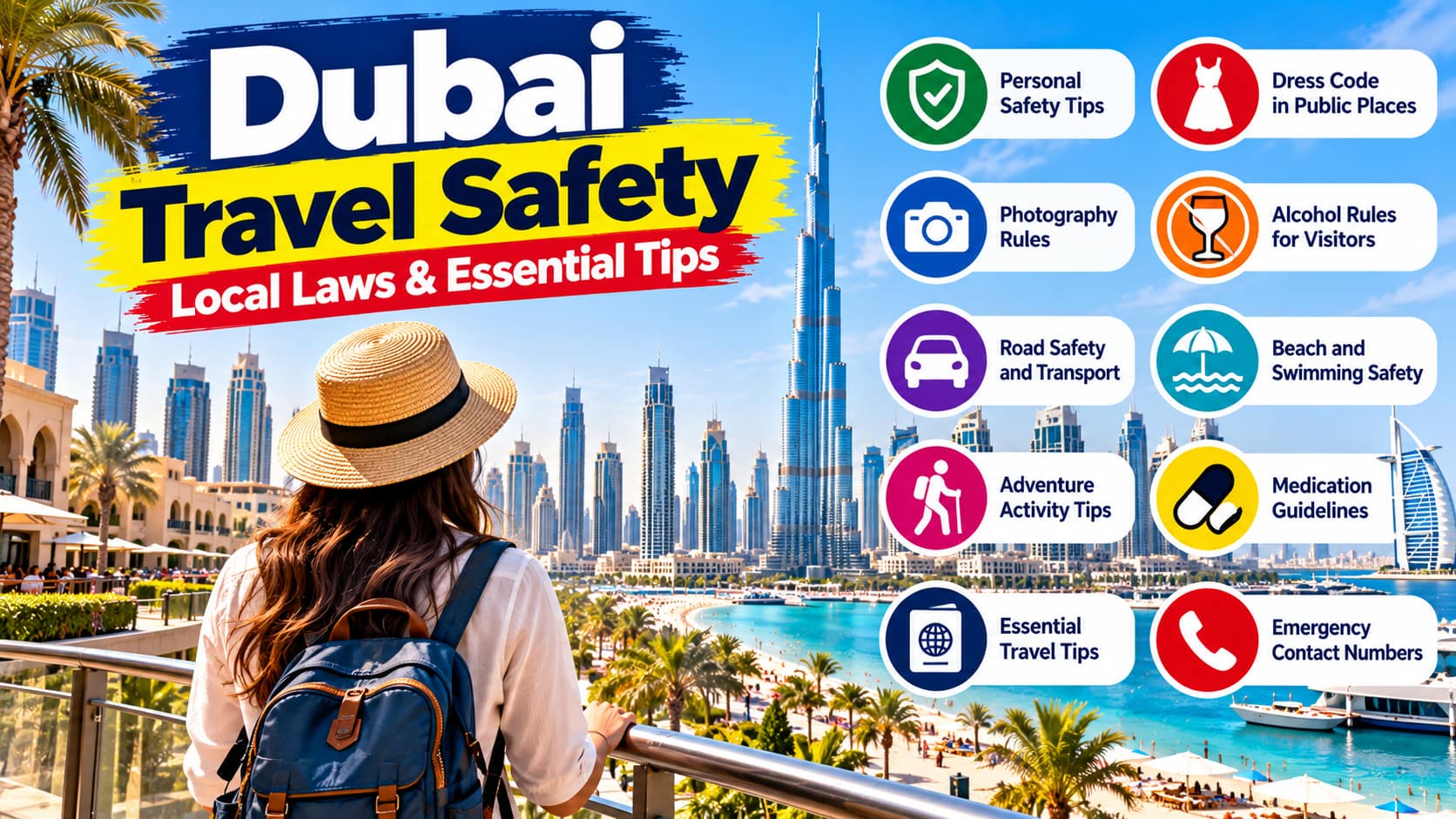
Dubai Travel Safety, Local Laws and Essential Tips are important for visitors who want to enjoy a comfortable and trouble-free trip in the UAE. Dubai welcomes tourists from around the world, but visitors should understand local customs, follow public conduct rules and take practical precautions while exploring the city.
From protecting personal belongings and staying safe on beaches to understanding photography restrictions, road safety and emergency procedures, a little preparation can help travellers avoid common problems. This guide focuses exclusively on the safety measures and local rules that tourists need during their stay, rather than the UAE police system or the wider law-and-order framework.
Is Dubai Safe for Tourists?
Dubai is a popular destination for solo travellers, couples and families. Visitors can explore shopping malls, beaches, tourist attractions, restaurants and public spaces while following ordinary travel precautions.
However, personal safety also depends on responsible behaviour and awareness of your surroundings. Tourists should take care of their belongings, use licensed transport, follow safety instructions at attractions and understand the local rules that apply to visitors.
Travellers should also check official travel advisories and airline updates before departure, as regional developments, weather conditions or temporary restrictions may affect travel plans.
Personal Safety Tips for Tourists in Dubai
Taking simple precautions during your trip can help prevent avoidable difficulties and protect your belongings.
Keep Your Personal Belongings Secure
When visiting busy locations such as shopping malls, markets, beaches, Metro stations and tourist attractions, keep your passport, phone, wallet and other valuables secure.
- Use a secure bag and keep it within your sight.
- Avoid carrying unnecessary cash or valuables.
- Keep digital copies of important travel documents in a secure location.
- Do not leave your phone, wallet or bags unattended in public places.
- Check your belongings before leaving taxis, restaurants and tourist attractions.
If you lose an important item, contact the relevant venue, transport provider or appropriate support service as soon as possible.
Stay Safe When Travelling Alone
Dubai Travel Budget: Accommodation, Transport & Daily Costs
Dubai Public Transport Guide: Metro, Nol Card, Taxis & Fares
Dubai Hotel Booking Guide: Choosing the Right Accommodation
Dubai is visited by many solo travellers, but it is still important to plan your movements carefully.
Share your itinerary with someone you trust, keep your phone charged and use recognised transport services. When travelling to unfamiliar areas, check the route in advance and avoid isolated locations, particularly late at night.
Solo travellers should also keep their hotel address and emergency contact details accessible throughout the trip.
Choose Licensed Transport
Use official taxis, recognised ride-hailing services and authorised public transport when travelling around Dubai. Confirm the vehicle and driver details before entering a booked ride, and check that the destination is correct.
When using the Metro, buses or Tram, follow passenger instructions and keep your Nol card and personal belongings secure. If you are unfamiliar with a route, check your journey before boarding.
Dubai Travel Insurance: Coverage & Benefits
Airport to Downtown Dubai: Transport Guide
Dubai to Abu Dhabi & Sharjah: Transport Guide
Dubai Local Laws Tourists Should Know
Visitors are expected to respect UAE laws and local customs while staying in Dubai. Some rules apply to public behaviour, photography, alcohol, medicines and personal conduct.
Dress Code in Public Places
Dubai is a multicultural city, and a wide range of clothing styles are commonly seen. However, visitors are expected to dress appropriately in public spaces and respect the cultural expectations of certain locations.
Tourists should consider the following:
- Wear suitable clothing in shopping malls, government facilities and other public places.
- Choose modest clothing when visiting historic neighbourhoods and religious sites.
- Wear swimwear only at beaches, swimming pools, waterparks and other designated areas.
- Follow the specific dress requirements of mosques and other religious places.
- Avoid clothing with offensive images, slogans or messages.
Women visiting mosques may be required to cover their hair, arms and legs. Specific requirements can vary by venue, so check before visiting.
Public Behaviour and Etiquette
Respectful behaviour is important when interacting with people in Dubai. Visitors should avoid conduct that may offend others or breach local regulations.
Keep public displays of affection modest. Holding hands may be acceptable, but kissing and intimate behaviour in public can lead to complaints or legal consequences.
Avoid shouting, offensive language, obscene gestures, harassment or behaviour that disturbs other people. Respectful communication and consideration for local customs can help tourists enjoy their stay without unnecessary misunderstandings.
Photography and Video Recording Rules
Dubai has many popular photography locations, including landmarks, beaches, shopping areas and architectural attractions. However, visitors should be careful about what they photograph and record.
- Ask permission before photographing identifiable people, especially children.
- Avoid photographing military facilities, sensitive government locations or restricted areas.
- Observe signs that prohibit photography or filming.
- Respect privacy when recording videos in public places.
- Do not share images or recordings of others in ways that violate their privacy or applicable laws.
Photography rules may differ depending on the location. When uncertain, ask the venue staff or avoid taking the photograph.
Alcohol Rules for Visitors
Alcohol is available to eligible adults at licensed establishments, such as certain hotels, bars and restaurants. The minimum legal drinking age in Dubai is generally 21.
Visitors should consume alcohol only in permitted locations and avoid public intoxication or disorderly behaviour. Driving after consuming alcohol is prohibited and can result in serious legal consequences.
Always arrange suitable transport if you have been drinking, and follow the rules of the establishment you are visiting.
Medication and Restricted Substances
Some medicines that are commonly used in other countries may be restricted or controlled in the UAE. Travellers carrying prescription medication should check whether it is permitted before departure.
Keep medicines in their original packaging and carry a valid prescription or supporting medical documentation. Certain controlled medicines may require prior approval or additional documents.
Never carry medicines for another person without understanding their contents and legal status. Illegal drugs and prohibited substances are subject to strict laws in the UAE.
Road Safety and Getting Around Dubai
Dubai has a modern road network, but tourists should remain alert when walking, driving or using public transport.
Pedestrian Safety
Use designated pedestrian crossings, traffic signals and footbridges where available. Avoid crossing busy roads at unauthorised points, even when the road appears clear.
When walking near major roads, stay on designated footpaths and remain aware of vehicles entering or exiting parking areas.
Taxi and Ride-Hailing Safety
Use official taxis or recognised ride-hailing services. Check the vehicle registration and booking details before getting in, particularly when using a service booked through an app.
Keep your personal belongings with you and confirm your destination. If you feel uncomfortable or notice an immediate safety concern, move to a safe public location and seek appropriate assistance.
Driving a Rental Car
Visitors planning to rent a car should check the driving licence requirements that apply to their nationality and visa status. Confirm rental conditions, insurance coverage and any restrictions before collecting the vehicle.
Follow speed limits, traffic signals and road signs. Avoid using a mobile phone while driving unless using a legally permitted hands-free system. Never drive after consuming alcohol.
If you are involved in a road accident, follow the required reporting procedure and contact the relevant emergency service when necessary.
Beach and Swimming Safety in Dubai
Dubai’s beaches and waterfront areas are major attractions for tourists. However, sea conditions, weather and swimming ability can affect personal safety.
- Swim only in designated swimming areas.
- Follow lifeguard instructions and warning flags.
- Avoid entering the sea when swimming is prohibited or conditions are unsafe.
- Keep children under close supervision near water.
- Use suitable sun protection and drink enough water.
- Avoid swimming alone in unfamiliar areas.
- Follow beach rules regarding permitted activities and operating hours.
Strong currents, waves and sudden changes in weather can create risks even for confident swimmers. If conditions are unclear, seek advice from lifeguards or avoid entering the water.
Desert Safari and Adventure Activity Safety
Desert safaris, dune bashing, quad biking, camel riding and other outdoor activities are popular among visitors to Dubai. These experiences can involve risks, particularly when safety instructions are ignored.
Choose a reputable, authorised tour operator and confirm what is included in the activity before booking.
For safer participation:
- Follow the guide’s instructions throughout the activity.
- Use seat belts and provided safety equipment.
- Do not operate vehicles or equipment without the required training and permission.
- Inform the operator about relevant medical or mobility needs.
- Carry drinking water and suitable sun protection.
- Avoid participating if you feel unwell or the conditions appear unsafe.
Some adventure activities may have age, height, health or weight restrictions. Check these requirements before booking and ensure your travel insurance covers the activity you intend to undertake.
Weather Safety: Heat, Sun and Sandstorms
Dubai can experience very high temperatures, especially during the summer months. Heat exposure can lead to dehydration, exhaustion and other heat-related illnesses.
Tourists should plan outdoor activities during cooler parts of the day whenever possible. Wear light, breathable clothing, use sunscreen, take breaks in shaded or air-conditioned areas and drink water regularly.
During sandstorms, heavy rain or other adverse weather conditions, follow official alerts and local instructions. Avoid unnecessary outdoor travel when visibility is poor or conditions become hazardous.
If you experience severe dizziness, confusion, fainting or other serious symptoms related to heat exposure, seek urgent medical assistance.
Food and Drinking Water Safety
Dubai offers a wide variety of international and local cuisine. Tourists can reduce the risk of food-related illness by choosing reputable food outlets and following basic hygiene practices.
- Eat at establishments that maintain good hygiene.
- Check that food is properly cooked and served at a suitable temperature.
- Wash or sanitise your hands before eating.
- Drink safe, properly stored water.
- Be careful with food that has been left uncovered or exposed to heat for long periods.
- Inform restaurant staff about serious food allergies before ordering.
If you develop severe or persistent symptoms after eating, seek medical advice.
Digital and Financial Safety While Travelling
Tourists often use smartphones for navigation, bookings, banking and online payments. Protecting personal information is an important part of travel safety.
Use secure internet connections when accessing sensitive accounts, enable screen locks and use strong passwords. Avoid sharing one-time passwords, banking credentials or passport details through suspicious messages or websites.
When making bookings or payments, use recognised platforms and verify the merchant or service provider. Be cautious of unsolicited offers, unexpected payment requests and messages claiming to be from hotels, airlines or travel companies.
Keep your bank’s contact information accessible so you can quickly report a lost card or suspicious transaction.
Safety for Families and Children
Families visiting Dubai should plan activities according to the age and needs of their children. Busy attractions, large shopping malls, beaches and theme parks can be difficult to navigate when travelling with young children.
Parents and guardians should:
- Keep children within sight in crowded locations.
- Agree on a meeting point in case family members become separated.
- Keep emergency contact details accessible.
- Use appropriate child safety equipment in vehicles.
- Supervise children around swimming pools, beaches and water attractions.
- Check age and height restrictions before booking activities.
For younger children, consider carrying identification or a contact card with a parent’s phone number, particularly when visiting crowded attractions.
What to Do in an Emergency in Dubai
Knowing how to seek help can be important if you experience a medical emergency, accident, fire or other immediate danger during your trip.
The main emergency contact numbers in Dubai and across the UAE include:
| Emergency service | Number |
|---|---|
| Police | 999 |
| Ambulance | 998 |
| Fire and Civil Defence | 997 |
| Coastguard | 996 |
When calling an emergency service, explain what has happened, provide your exact location or a nearby landmark and follow the operator’s instructions.
For non-emergency visitor assistance, tourists can check the current Dubai Tourism Police contact details through official channels.
If you require medical treatment, contact your travel insurer as soon as practical and retain relevant medical reports, prescriptions and receipts for any eligible insurance claim.
Essential Documents and Preparations Before Travelling
Preparing important travel information before departure can help prevent avoidable problems during your visit.
Make sure you have:
- A valid passport and the required UAE visa or entry permission.
- Confirmed flight and accommodation details.
- Suitable travel insurance, including medical coverage.
- Copies of important travel documents stored securely.
- Emergency contact details and your embassy or consulate information.
- Any required prescriptions or supporting documents for medicines.
- A working mobile phone with access to maps and essential travel information.
Keep your passport and other important documents in a secure place and carry only what is necessary for your planned activities.
Common Safety Mistakes Tourists Should Avoid
Even a well-planned trip can be disrupted by simple mistakes. Visitors should avoid:
- Leaving valuables unattended in public places.
- Photographing people or restricted locations without checking the rules.
- Wearing swimwear outside permitted areas.
- Ignoring beach warnings or adventure activity safety instructions.
- Driving without confirming licence and rental requirements.
- Carrying restricted medication without checking the regulations.
- Drinking alcohol and then attempting to drive.
- Sharing sensitive personal or financial information with unknown contacts.
- Ignoring official weather alerts or travel advisories.
Understanding these practical precautions can help visitors make informed decisions and avoid unnecessary difficulties during their holiday.
Conclusion
Dubai Travel Safety, Local Laws and Essential Tips can help tourists prepare for a comfortable and responsible visit to the city. Visitors should protect their personal belongings, follow road and beach safety guidance, respect local customs, understand photography and medication restrictions, and use recognised travel services.
Being aware of local rules and taking sensible precautions can make it easier to enjoy Dubai’s attractions, beaches, shopping destinations and outdoor experiences. Before and during the trip, travellers should also check official updates, keep emergency information accessible and seek help promptly whenever a serious safety concern arises.