Dubai visa types vary depending on a traveller’s nationality, purpose of travel and intended length of stay. The UAE offers several entry options, including visa-free entry, visa on arrival, tourist visas, transit visas and other visit permits. Understanding the differences can help travellers choose the appropriate option before planning their trip to Dubai.
Dubai is part of the United Arab Emirates (UAE), so its immigration system operates under UAE entry regulations. Some visa services are handled through Dubai’s General Directorate of Residency and Foreigners Affairs (GDRFA), while others are managed by the Federal Authority for Identity, Citizenship, Customs and Port Security (ICP).
1. Visa-Free Entry
Some nationalities can enter the UAE without applying for a visa in advance. The permitted period of stay and entry conditions depend on the traveller’s passport and applicable UAE immigration rules.
Visa-free entry is generally intended for eligible short-term visitors. Travellers should check their eligibility, permitted stay and passport requirements before departure, as visa-free access does not apply to every nationality.
2. Visa on Arrival
Eligible travellers can obtain a visa on arrival at a UAE port of entry, subject to their nationality and applicable conditions.
The permitted stay may vary depending on the passport held and the relevant entry arrangement. Some travellers may qualify for an extension, while others must leave before their authorised stay expires.
Visa-on-arrival eligibility should be confirmed through official UAE immigration information or the relevant airline before travelling.
3. Tourist Visa
A tourist visa is intended for people visiting Dubai and other parts of the UAE for holidays, sightseeing, leisure or short-term personal visits.
Tourist visas are available in different formats, including:
- 30-day tourist visa: For eligible short visits.
- 60-day tourist visa: For travellers planning a longer stay.
- Single-entry tourist visa: Allows one entry during the visa’s validity.
- Multiple-entry tourist visa: Allows eligible travellers to enter the UAE more than once during the authorised validity period.
- Five-year multiple-entry tourist visa: A longer-term option for eligible travellers who expect to visit the UAE regularly.
The five-year multiple-entry tourist visa generally allows a stay of up to 90 days per visit, subject to the applicable annual limits and conditions. Requirements may include a valid passport, health insurance, a return or onward ticket and evidence of sufficient funds.
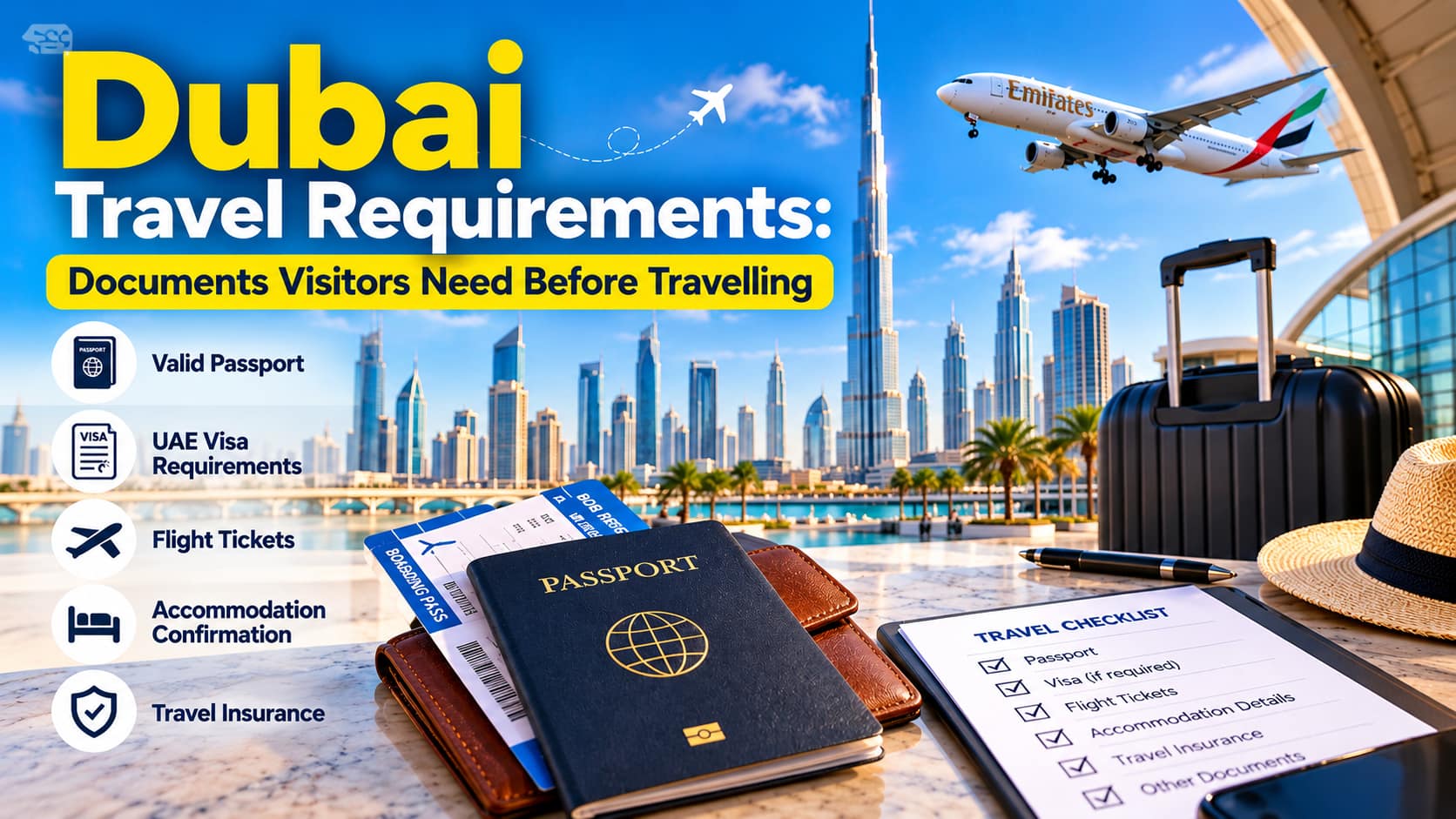
Dubai Travel Requirements: Documents Visitors Need Before Travelling
Tourist visa durations, extension options and conditions depend on the specific visa issued. Travellers should confirm the authorised stay printed on their visa rather than assume that all tourist visas have identical terms.
4. Transit Visa
A transit visa is designed for travellers passing through the UAE on their way to another country who wish to leave the airport during a stopover and are not eligible for visa-free entry or a visa on arrival.
The UAE offers two transit visa durations:
- 48-hour transit visa
- 96-hour transit visa
Transit visas are single-entry and cannot be extended. They must be arranged and approved before entering the UAE, usually through a UAE-based airline or an authorised channel. Travellers must also meet the relevant passport and onward travel requirements.
Dubai Airport Arrival Guide: Immigration, Customs & Baggage
A transit visa is not intended for an extended holiday, employment or long-term stay.
5. Visit Visa for Family and Friends
A visit visa may be suitable for people travelling to the UAE to visit relatives or friends. Depending on the applicant’s circumstances and the applicable rules, the visa may be arranged through an eligible sponsor or host.
The entry permit may be issued for a single entry or multiple entries, depending on the approved application. The permitted stay, documentation and sponsorship conditions vary by case.
Travellers should ensure that the purpose of their visit matches the visa issued and that they meet all applicable requirements before arrival.
6. Jobseeker Visit Visa
The UAE offers a jobseeker visit visa for eligible individuals who want to explore employment opportunities in the country without having a local sponsor.
This visa is intended for job exploration, not employment itself. Applicants must meet the relevant eligibility requirements, which may include educational qualifications or professional criteria.
A person who secures a job must complete the required employment and residence procedures before starting work. Holding a jobseeker visa does not itself authorise employment.
7. Business Exploration Visit Visa
A business exploration visit visa is designed for eligible individuals who wish to explore business opportunities, assess investment prospects or consider establishing a business in the UAE.
It may be suitable for entrepreneurs and prospective investors who need to visit the country for preliminary business activities. Eligibility, documentation and the permitted period of stay depend on the relevant immigration rules and approval.
This visa should not be confused with a business licence, investor residence visa or permission to undertake activities that require separate authorisation.
8. Medical Treatment Visit Visa
A medical treatment visit visa allows eligible foreign nationals to enter the UAE for approved medical treatment. The application is generally arranged through an authorised healthcare provider or eligible sponsor.
Depending on the circumstances, accompanying individuals may also be eligible for relevant entry arrangements. Applicants may need medical documentation, insurance and other supporting records.
The permitted stay and extension conditions depend on the approved visa and the treatment requirements.
9. Study and Training Visit Visa
A study or training visit visa may be available to eligible individuals travelling to the UAE for approved educational programmes, training, rehabilitation or similar short-term purposes.
The relevant educational institution, training provider or other eligible sponsor may need to support the application. The applicant must comply with the approved programme and visa conditions.
This type of entry permit is distinct from a student residence visa intended for longer-term study.
10. GCC Resident Entry Permit
Foreign nationals who legally reside in a Gulf Cooperation Council (GCC) country may be eligible for a UAE entry permit designed specifically for GCC residents.
Eligibility may depend on the validity of the applicant’s GCC residence permit, profession or other conditions set by the UAE authorities. The applicant may need to apply before travelling.
A GCC residence permit does not automatically grant entry to Dubai. Travellers should check the latest eligibility rules and obtain any required approval before departure.
11. Residence Visas: How They Differ from Visitor Visas
Some travellers may also come across UAE residence visas while researching entry options. These are different from ordinary short-term visitor visas and are intended for eligible people who plan to reside in the country under an approved basis.
Common residence categories include:
- Employment residence visa: For eligible individuals employed by a UAE-based organisation, subject to the required work and residence approvals.
- Student residence visa: For eligible students sponsored through an approved educational institution or other authorised arrangement.
- Family residence visa: For eligible family members sponsored by a UAE resident who meets the applicable conditions.
- Investor residence visa: For eligible investors who meet the relevant investment and immigration requirements.
- Golden Visa: A long-term residence option, generally valid for five or ten years depending on the eligible category and approval.
- Blue Visa: A long-term residence category for eligible individuals recognised for their contributions to environmental protection and sustainability.
These categories have specific eligibility criteria and should not be treated as tourist or general visit visas. A visitor visa does not grant the right to work or reside in the UAE on a long-term basis.
12. How to Apply for a UAE Tourist Visa
Travellers who need a tourist visa can generally apply through eligible UAE-based airlines, licensed travel agencies, hotels or authorised government channels, depending on the visa type.
The usual process includes:
- Check visa eligibility: Confirm whether the passport holder needs a visa, qualifies for visa-free entry or can obtain a visa on arrival.
- Choose the appropriate visa: Select the relevant entry type, duration and single-entry or multiple-entry option.
- Prepare the documents: Requirements commonly include a passport valid for at least six months, a recent photograph, health insurance and a return or onward ticket. Additional documents may be required.
- Submit the application: Apply through an authorised channel that handles the relevant visa category.
- Pay the applicable charges: Fees and any required guarantees vary by visa type and application channel.
- Wait for approval: Travel only after receiving the required visa or entry authorisation, where applicable.
Visa applications are subject to review, and submission does not guarantee approval. Travellers should verify the authenticity of any agent or service provider before submitting personal documents or making payments.
13. Visa Duration, Extensions and Important Limitations
The permitted stay in the UAE depends on the exact visa or entry permission issued. Tourist visas may be available for different durations, while transit visas are limited to 48 or 96 hours.
Some visitor visas can be extended if the relevant category and immigration authority permit it. Extensions are not automatic, and applicants must meet the applicable conditions and obtain approval before their authorised stay expires.
Travellers should also remember:
- A visa’s entry validity and its permitted duration of stay are not necessarily the same.
- A multiple-entry visa does not mean unlimited stay in the UAE.
- A tourist or visit visa does not authorise employment.
- Overstaying can lead to fines or other immigration consequences.
- Visa requirements and procedures can change, so current rules should be checked before travel.
14. Which Visa Should Travellers Consider?
The appropriate visa depends on the traveller’s nationality, reason for visiting and expected length of stay.
| Travel purpose | Relevant entry option |
|---|---|
| Short holiday or sightseeing | Tourist visa, visa-free entry or visa on arrival, if eligible |
| Short airport stopover with a visit outside the airport | Transit visa, if required |
| Visiting relatives or friends | Family or friend visit visa |
| Exploring employment opportunities | Jobseeker visit visa, if eligible |
| Exploring investment or business opportunities | Business exploration visit visa |
| Approved medical treatment | Medical treatment visit visa |
| Approved short-term training or study | Study or training visit visa |
| Visiting from a GCC country | GCC resident entry permit, if eligible |
| Long-term residence | Relevant residence visa category |
Travellers should choose an entry option that accurately reflects their intended activities. A visa issued for one purpose may not be suitable for another.
Conclusion
Dubai offers different visa and entry options to accommodate tourists, transit passengers, family visitors, jobseekers, business visitors and other eligible travellers. The right option depends on nationality, travel purpose, permitted duration and individual eligibility.
Before booking a trip, travellers should confirm the latest UAE immigration requirements, prepare the necessary documents and ensure that their approved visa matches their intended stay. Careful preparation can help avoid travel delays, entry issues and immigration violations.