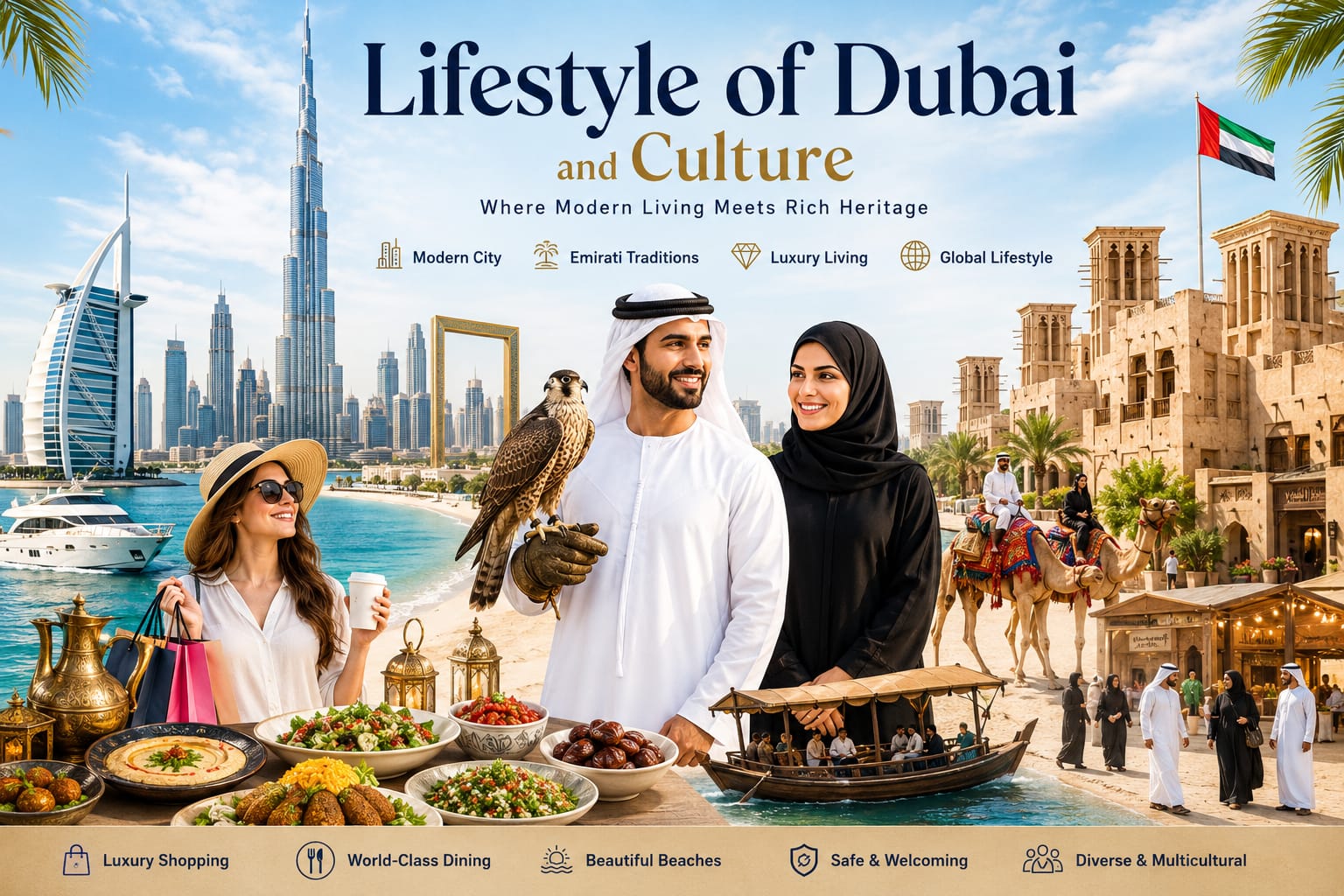
Traditional Emirati dishes reflect the history, geography and everyday life of the United Arab Emirates. Traditional Emirati dishes developed around the resources available in the region, including rice, meat, fish, dates, wheat and locally used spices.
Emirati cuisine has been influenced by the UAE’s desert environment, coastal communities and centuries of trade across the Arabian Peninsula and Indian Ocean. Today, these traditional foods remain an important part of Emirati culture and can be enjoyed in homes, restaurants, heritage villages and cultural celebrations.
What Are Traditional Emirati Dishes?
Traditional Emirati food is known for hearty rice dishes, slow-cooked meats, seafood, breads, dates and distinctive spice combinations.
Some dishes are associated with family gatherings and celebrations, while others were historically everyday meals for communities living in the desert or along the coast.
Popular examples include Al Machboos, Al Harees, Al Madrooba, Thareed, Chebab, Regag and Luqaimat.
Emirati Hospitality & Customs: Traditions, Etiquette & Social Values
Emirati Wedding Traditions: Customs, Ceremonies & Culture
What Is Al Machboos?
Al Machboos is one of the best-known traditional dishes in Emirati cuisine.
It is generally prepared with rice, meat, chicken or fish and a mixture of spices. The ingredients are cooked together so that the rice absorbs the flavour of the meat, seafood and seasoning.
Depending on the recipe and occasion, ingredients such as dried lime, onions, tomatoes and aromatic spices may be added.
Al Machboos is particularly associated with family meals, gatherings and special occasions.
Traditional Emirati Clothing: Dress, Meaning & Cultural Identity
Emirati Arts, Music & Poetry: Traditional Culture & Heritage
What Is Al Harees?
Al Harees is a traditional Emirati dish made primarily from wheat and meat.
The ingredients are cooked slowly for several hours until they develop a smooth, porridge-like consistency. The dish is simple in terms of its main ingredients but requires patience and careful preparation.
Al Harees is especially associated with Ramadan, weddings, religious occasions and other celebrations.
Its long cooking process and communal preparation also reflect the importance of sharing food during major family and cultural occasions.
What Is Al Madrooba?
Al Madrooba is another traditional Emirati dish prepared using ingredients such as fish, flour and spices.
The mixture is cooked until it becomes thick and smooth, creating a comforting dish with a rich flavour.
Historically, fish played an important role in coastal Emirati communities, making seafood-based dishes an important part of traditional UAE cuisine.
What Is Thareed?
Thareed is a traditional bread-and-stew dish found across the Arabian Gulf, including the UAE.
It usually combines pieces of thin bread with a meat or vegetable stew. The bread absorbs the broth, creating a filling and flavourful meal.
Thareed is particularly associated with home cooking and is also popular during Ramadan.
What Is Chebab?
Chebab is a traditional Emirati-style pancake or flatbread.
It is often prepared with flour and ingredients that give it a lightly sweet and aromatic flavour. Saffron, cardamom and other spices may be used depending on the recipe.
Chebab is commonly enjoyed as a breakfast or snack and is often served with sweet accompaniments.
What Is Regag?
Regag is a very thin traditional Emirati bread.
It is prepared as a large, thin sheet and can be eaten with other foods or used as part of a meal.
Regag has long been associated with Emirati home cooking and remains a familiar part of traditional food culture.
Its simplicity also reflects the practical cooking traditions that developed in the region.
What Is Luqaimat?
Luqaimat is one of the most popular Emirati traditional sweets.
These small fried dough balls are typically served warm and topped or accompanied with sweet ingredients such as date syrup.
Their crisp exterior and soft interior make them a popular dessert during family gatherings, Ramadan and festive occasions.
Luqaimat is also widely available at Emirati restaurants and cultural events.
What Role Do Dates Play in Emirati Cuisine?
Dates have a special place in Emirati food culture.
The date palm has historically been important to life in the UAE, providing food and other useful materials. Dates can be eaten on their own, served to guests or incorporated into different traditional recipes.
Dates are also closely connected with Emirati hospitality and are commonly offered alongside Arabic coffee.
Different varieties provide different flavours and textures, ranging from soft and caramel-like to firmer and less sweet.
What Spices Are Used in Emirati Food?
Traditional Emirati cuisine uses a variety of aromatic spices to develop flavour.
Commonly used ingredients include:
- Cardamom
- Saffron
- Cinnamon
- Turmeric
- Black pepper
- Dried lime
- Cloves
- Coriander
The exact combination varies between dishes and families.
Rather than relying only on heat, Emirati cooking often uses spices to create layers of fragrance and flavour.
What Traditional Emirati Seafood Dishes Are Popular?
The UAE’s coastal history has strongly influenced its cuisine.
Before the discovery of oil transformed the country’s economy, fishing and pearling were important activities for many coastal communities. Fish and other seafood therefore became an important part of traditional meals.
Fish can be prepared with rice and spices, incorporated into stews or cooked using traditional methods.
This coastal influence is one reason Emirati cuisine is more diverse than a purely desert-based food tradition.
How Did the Desert Influence Emirati Food?
The desert environment influenced what ingredients were available and how food was prepared.
Traditional communities relied on ingredients that could be stored, transported and prepared using relatively simple methods. Dates, grains, meat and dried ingredients therefore became important parts of the regional diet.
Slow cooking was also useful for preparing meat and grains and producing filling meals for families and communities.
The result is a cuisine shaped by both desert life and coastal traditions.
What Do Emiratis Eat During Special Occasions?
Food becomes particularly important during weddings, Ramadan, Eid and family gatherings.
Large meals may include rice, meat, seafood, breads, sweets and dates. The exact menu depends on the occasion, family traditions and region.
Traditional dishes are often prepared in larger quantities so that food can be shared with relatives and guests.
This makes traditional cuisine an important part of cultural celebrations rather than simply everyday cooking.
What Are Traditional Emirati Foods During Ramadan?
Ramadan has a strong connection with traditional Emirati food.
After the daily fast, families may enjoy dates, drinks, soups, rice dishes, meat, breads and traditional sweets.
Dishes such as Al Harees, Thareed and Luqaimat are particularly associated with Ramadan and family gatherings.
The meal is also an important social moment, bringing families and communities together after the day’s fast.
How Is Traditional Emirati Food Served Today?
Traditional Emirati dishes are now enjoyed in both traditional and modern settings.
Visitors can find Emirati cuisine in specialised restaurants, heritage areas, cultural festivals and hotels, while families continue to prepare traditional recipes at home.
Modern restaurants may also present traditional dishes in contemporary ways without removing their cultural identity.
This has helped introduce Emirati cuisine to international visitors while keeping traditional recipes visible within the UAE.
Why Are Traditional Emirati Dishes Important to UAE Culture?
Traditional food is closely connected to the history of the Emirates.
Everyday ingredients, cooking methods and recipes tell stories about desert communities, coastal life, trade, family traditions and hospitality.
For Emiratis, traditional dishes help preserve memories and cultural identity. For visitors, trying local food provides another way to understand the UAE beyond its modern architecture and international restaurant scene.
Traditional Emirati Dishes: A Taste of UAE Heritage
Traditional Emirati dishes represent much more than food on a plate. They reflect the UAE’s desert and coastal history, family traditions, celebrations and changing way of life.
From Al Machboos and Al Harees to Thareed, Chebab, Regag and Luqaimat, these dishes continue to connect modern UAE life with generations of culinary heritage.
As Dubai and the wider UAE continue to welcome people from around the world, traditional Emirati cuisine remains an important way to experience the country’s culture through its flavours, ingredients and food traditions.