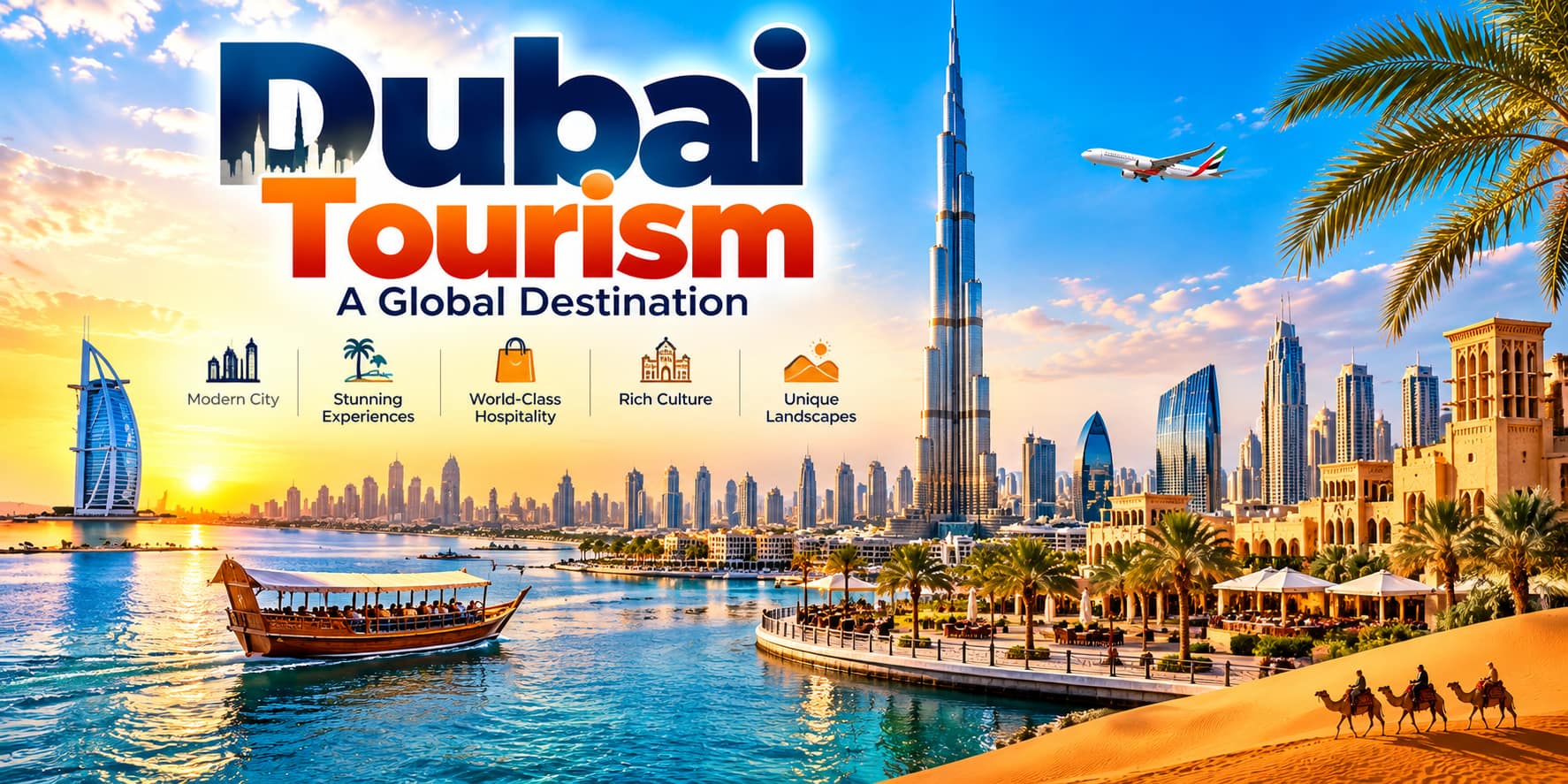
Iconic Buildings in Dubai have helped create one of the world’s most recognisable skylines. From the record-breaking Burj Khalifa to the sail-shaped Burj Al Arab and the futuristic Museum of the Future, Dubai architecture is known for bold designs, ambitious engineering and distinctive landmarks.
The city’s famous buildings are not simply tall structures. Many have become symbols of Dubai’s transformation into a global city and are now closely connected with its international identity.
What Makes Dubai Architecture So Iconic?
Dubai architecture stands out because of its combination of height, unusual shapes, modern engineering and visually distinctive designs.
The city has developed skyscrapers, hotels, museums, observation structures and major developments that are immediately recognisable. Some buildings are designed around record-breaking height, while others attract attention through their unusual forms or connections to Dubai’s vision for the future.
Burj Khalifa
Burj Khalifa is the most famous example of Dubai’s modern architecture and remains the world’s tallest building at 828 metres.
Located in Downtown Dubai, the tower opened in 2010 and became a global symbol of the city’s ambition. Its slender design, vertical scale and distinctive appearance have made it one of the most recognisable skyscrapers anywhere in the world.
Beyond its height, Burj Khalifa is an important part of Dubai’s skyline and a defining example of the city’s approach to large-scale architectural development.
Places to Visit in Dubai: Major Tourist Destinations
Burj Al Arab
The Burj Al Arab is one of the most recognisable buildings in Dubai, largely because of its distinctive sail-shaped design.
Built on its own island, the luxury hotel rises 321 metres above the Arabian Gulf and has become closely associated with Dubai’s luxury image since opening in 1999. Its unusual exterior makes it one of the most photographed architectural landmarks in the city.
The building demonstrates how architecture can become part of a destination’s global brand.
Dubai Desert Tourism: Desert Safari, Dune Bashing & Experiences
Museum of the Future
The Museum of the Future represents another direction in Dubai architecture.
Located on Sheikh Zayed Road, the building has an asymmetric torus-shaped structure covered with steel and glass. Its exterior also incorporates Arabic calligraphy into the facade, creating a design that looks very different from a conventional skyscraper.
The design reflects Dubai’s focus on science, technology, innovation and future development, making the building an architectural symbol as well as a museum.
Best Beaches in Dubai: Beach Tourism, Public Beaches & Coastal Experiences
Dubai Frame
The Dubai Frame takes a much simpler geometric idea and turns it into a major architectural landmark.
The giant frame-shaped structure in Zabeel Park reaches approximately 150 metres high and provides views towards both older and newer parts of Dubai. Its design creates a visual connection between the city’s past and its modern skyline.
This combination of architecture and city views has made Dubai Frame one of the city’s most recognisable structures.
Cayan Tower
Cayan Tower in Dubai Marina is famous for its twisting form.
The 73-storey residential tower rotates gradually as it rises, creating a distinctive spiral appearance. The building’s design gives it a different visual identity from the traditional straight skyscrapers found throughout Dubai’s skyline.
Cayan Tower is a good example of how engineering and architectural design can work together to create a building that becomes a visual landmark.
Emirates Towers
Emirates Towers are among the most recognisable early skyscrapers on Sheikh Zayed Road.
Their triangular forms and modern facade helped establish the visual character of Dubai’s main business corridor. The complex consists of an office tower and a hotel tower connected by a central podium.
The towers remain an important part of Dubai’s architectural history because they represent an earlier stage of the city’s rapid transformation into a modern business centre.
Ain Dubai
Ain Dubai on Bluewaters Island is a major example of Dubai’s large-scale structural engineering.
Standing around 250 metres high, the observation wheel is designed as a huge circular structure overlooking the city and Arabian Gulf. Its scale makes it an important part of Dubai’s modern skyline and waterfront development.
Unlike a conventional skyscraper, Ain Dubai demonstrates how Dubai’s architectural identity also extends to large public structures and engineering projects.
Atlantis, The Palm
Atlantis, The Palm is another instantly recognisable building in Dubai.
Located at the apex of Palm Jumeirah, the resort is known for its distinctive architectural style, large central arch and dramatic towers. Its location on the man-made island has also made it an important part of Dubai’s modern coastal skyline.
The building shows how architecture, hospitality and large-scale destination development can come together to create a globally recognised landmark.
One Za’abeel
One Za’abeel represents the newer generation of Dubai’s architectural landmarks.
The development consists of two towers connected by The Link, a large cantilevered structure suspended above the ground. Designed by Nikken Sekkei, the project has added another distinctive feature to Dubai’s evolving skyline.
It demonstrates that Dubai’s architectural development has continued beyond the city’s earlier generation of landmark skyscrapers.
Dubai’s Architecture and the Changing Skyline
Dubai’s skyline has changed dramatically over the past few decades. Earlier landmarks such as Emirates Towers helped establish the city’s modern business identity, while later structures such as Burj Khalifa, Cayan Tower and Museum of the Future pushed architectural design in new directions.
Today, Dubai’s skyline combines different generations of architecture rather than following a single design style. This mixture is one of the reasons the city has become so recognisable internationally.
Why Iconic Buildings Matter to Dubai
Dubai’s famous buildings are more than visual landmarks. They represent different aspects of the city’s development — business, tourism, luxury hospitality, innovation, engineering and global ambition.
Together, these structures have helped create an architectural identity that is strongly associated with Dubai. For visitors, they also provide a way to understand how the city has developed from a regional trading centre into a globally recognised modern destination.
Explore Dubai’s Iconic Architecture
The iconic buildings in Dubai show how architecture has become an important part of the city’s identity. From the extraordinary height of Burj Khalifa to the distinctive forms of Burj Al Arab, Museum of the Future, Dubai Frame and Cayan Tower, each landmark contributes something different to Dubai’s skyline.
Dubai’s architecture continues to evolve, meaning the city’s list of famous buildings is likely to keep growing as new projects reshape its skyline.