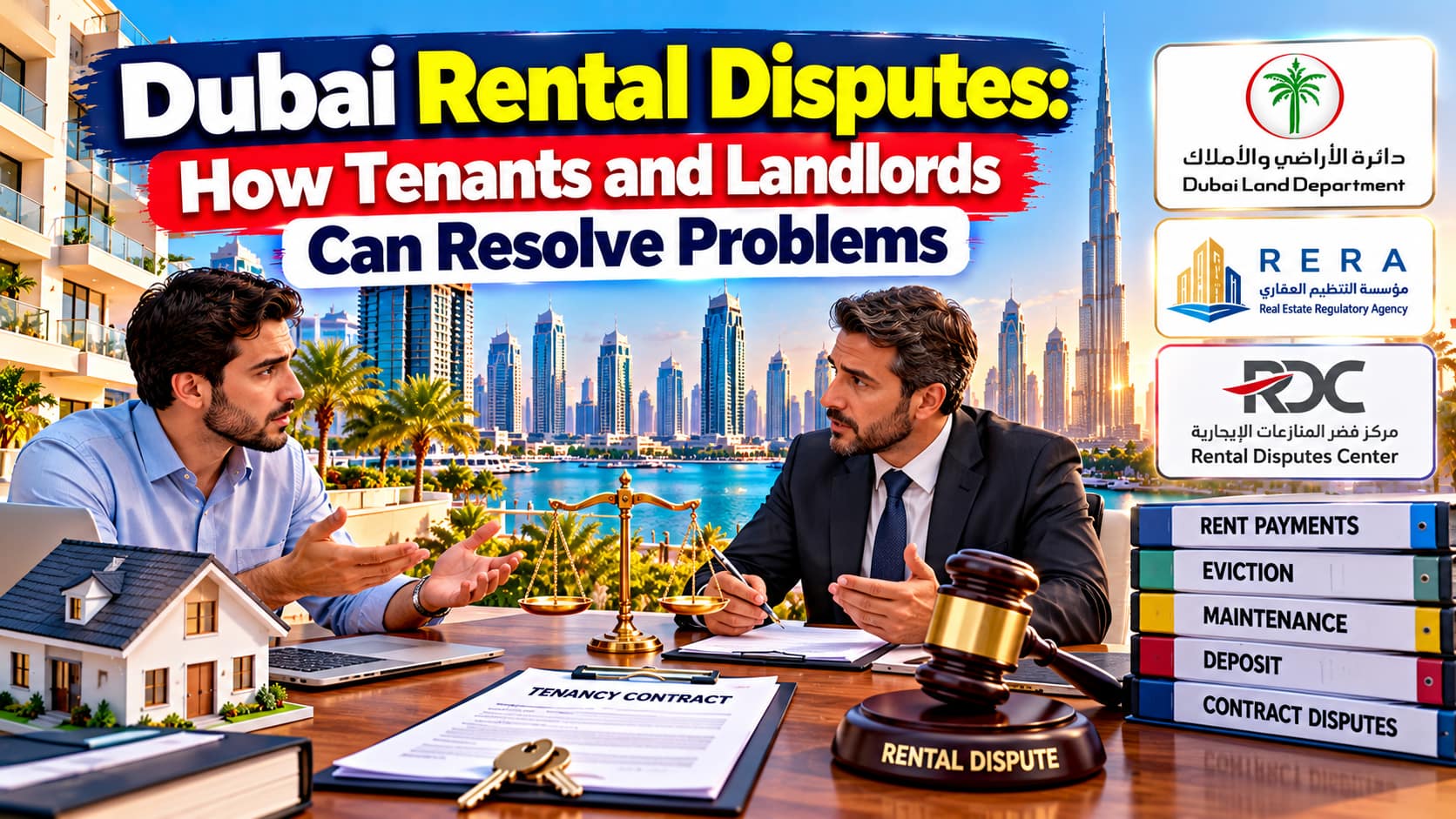
Dubai Rental Disputes can arise when tenants and landlords disagree over rent, renewal, eviction, maintenance, deposits, payments or other terms of a tenancy contract. Dubai has a dedicated Rental Disputes Center (RDC) that handles rental disputes between landlords and tenants and provides both settlement and legal dispute services.
Knowing the proper process can help both sides understand what to do when a rental problem cannot be resolved directly.
What Are the Most Common Dubai Rental Disputes?
Rental disagreements can involve several issues, including:
- Rent increases or rent payments
- Renewal or termination of a tenancy contract
- Eviction claims
- Security deposit disagreements
- Maintenance and repair responsibilities
- Unpaid rent or other financial claims
- Disagreements over notices
- Other contractual issues between the tenant and landlord
The RDC specifically handles disputes arising between landlords and tenants involving property in Dubai, including properties in free zones. (Rental Disputes Center)
Dubai Rental Dispute Center: Where Can You File a Case?
The Dubai Rental Dispute Center is the specialized judicial body for rental disputes in Dubai. It can deal with first-instance cases, appeals, certain provisional matters and enforcement of rental judgments.
Before starting a full lawsuit, the parties can also use the RDC’s amicable settlement service. If an agreement is reached, it is signed by the parties and conciliator and approved by a supervising judge, making the settlement enforceable through the RDC.
This can provide a formal route for resolving a disagreement without immediately going through full litigation.
Dubai Real Estate Advertising Rules: What Buyers and Brokers Should Know
Rental Dispute Dubai: What Should You Do First?
When a disagreement begins, both parties should first review the tenancy contract and the relevant communications.
Keep records of:
- The latest Ejari or tenancy contract
- Rent payment records
- Notices sent or received
- Emails and messages
- Maintenance requests
- Cheques and receipts
- Relevant utility bills
- Any other documents supporting the claim
The RDC lists the latest Ejari, Emirates ID and supporting evidence among the documents that may be required when registering a first-instance rental case.
If the disagreement can be resolved directly between the parties, documenting the agreement is important.
Dubai Property Services, Mortgages & Service Charges: What Owners Should Know
Tenant Landlord Dispute: When Should You Go to the RDC?
If the tenant and landlord cannot reach an agreement, either party can consider using the RDC’s dispute-resolution services.
For a first-instance rental lawsuit, the RDC allows the case to be registered through its website or through Real Estate Services Trustees Centers. The online process involves creating an account, entering the lease and party information, explaining the claim, uploading supporting documents and paying the applicable fees.
The RDC also provides a Virtual Judge service that gives users complimentary legal information about their rights as parties to a rental relationship before they proceed with a lawsuit.
How Does the Rental Dispute Process Work?
The general process is:
- Review the tenancy contract and available evidence.
- Try to resolve the issue directly with the other party.
- Consider the RDC amicable settlement service.
- If no settlement is reached, register the appropriate rental case.
- Upload the required documents and supporting evidence.
- Pay the applicable fees.
- Attend the hearing through the RDC’s tele-litigation system.
- Receive the judgment electronically.
The RDC states that documents must be submitted in Arabic or legally translated into Arabic and uploaded through its system.
How Much Does a Dubai Rental Dispute Case Cost?
The RDC currently lists the registration fee for many rental claims at 3.5% of the annual rent or lease value, with a minimum of AED 500 and a maximum of AED 20,000 for matters such as eviction, lease renewal, rent claims and certain termination cases.
For monetary claims, the fee is listed as 3.5% of the claimed amount, with a minimum of AED 500 and a maximum of AED 15,000. Additional charges can apply for process service, power of attorney and other services.
Because fees can depend on the type of case, it is important to check the current RDC service page before filing.
What If One Party Wants to Appeal?
A rental judgment from the first instance may be appealable under the applicable rules.
The RDC currently states that rental appeals against eligible first-instance judgments generally must be filed within 15 days, calculated according to whether the judgment was issued in the presence or absence of the relevant party.
An appeal involving a financial claim also requires the appellant to deposit security equal to half of the amount awarded against the appellant, subject to the applicable rules.
What Happens After a Rental Judgment?
A judgment does not necessarily end the process if the awarded party needs enforcement.
The RDC provides an execution proceeding for rental judgments, covering matters such as eviction, monetary claims and lease-renewal judgments.
The applicable enforcement procedure and fees depend on the type of judgment and claim.
What Should Tenants and Landlords Keep in Mind?
The best protection for both sides is good documentation.
Tenants should keep copies of their tenancy contract, Ejari, rent payments, notices and maintenance communications. Landlords should similarly maintain records of rent payments, notices, contracts, property-related communications and supporting documents.
Most importantly, a rental disagreement should be directed to the correct authority. DLD states that contractual disputes relating to lease contracts are not handled through its general real-estate complaint service and should instead be submitted through the Rental Disputes Center. (dubailand.gov.ae)
Final Takeaway
Dubai Rental Disputes do not have to remain unresolved. Tenants and landlords can first try to reach an agreement, use the RDC’s amicable settlement service, or proceed through the formal rental dispute process when necessary.
Keeping the tenancy contract, Ejari, payment records, notices and other evidence organized can make the process clearer for both parties. Always check the latest RDC requirements, fees and procedures before filing a case.