

Emirati wedding traditions reflect the importance of family, religion, community and cultural identity in the United Arab Emirates. While modern Emirati weddings can take place in hotels, wedding halls and large event venues, many celebrations continue to incorporate customs that connect today’s families with earlier generations.
Wedding practices can vary between families, emirates and generations, so there is no single ceremony followed by every Emirati family. Modern celebrations often combine traditional customs with contemporary wedding styles.
How Do Emirati Marriage Traditions Begin?
Traditionally, marriage has involved not only the bride and groom but also their families. Family involvement can begin during discussions about a potential marriage and continue through the engagement, marriage contract and wedding celebrations.
Historically, families played a particularly strong role in arranging and approving marriages. Today, Emirati couples may have more personal involvement in choosing their partners, while family support and participation remain important aspects of many weddings.
The process also reflects the Islamic foundations of marriage in Emirati society.
Traditional Emirati Clothing: Dress, Meaning & Cultural Identity
Emirati Hospitality & Customs: Traditions, Etiquette & Social Values
The Marriage Contract and Nikah
The marriage contract is an important part of an Emirati Muslim marriage.
Under UAE law, Muslim marriages are governed by the country’s Personal Status Law. The legal marriage contract requires essential elements such as the consent of the spouses, and where applicable the guardian’s role, along with witnesses. Authorised marriage officials, known as Mazoons, can conduct Islamic marriage contracts through the relevant judicial authorities.
The legal marriage contract should be distinguished from the larger wedding celebration. The contract establishes the marriage, while the wedding events provide the opportunity for families and communities to celebrate.
Emirati Arts, Music & Poetry: Traditional Culture & Heritage
Traditional Emirati Dishes: Famous Foods & UAE Cuisine
What Is the Role of Mahr?
Mahr, or dowry, is an important element of an Islamic marriage contract. It is an agreed amount or form of property given by the groom to the bride.
The concept has religious and legal significance and should not be confused with the general expenses of a wedding celebration.
In Emirati culture, the financial arrangements surrounding marriage have historically been connected with family responsibilities, although modern practices can vary considerably between families.
Emirati Engagement and Family Traditions
Before the wedding, families may become involved in formal engagement arrangements and preparations.
Traditional accounts describe meetings between the families and discussions about the proposed marriage. The process historically emphasized compatibility between families as well as the relationship between the prospective bride and groom.
Modern Emirati families may follow these traditions in different ways, with some maintaining formal customs while others have adopted more contemporary approaches.
Laylat Al Henna: The Henna Night
Laylat Al Henna, or Henna Night, is one of the best-known traditions associated with Emirati weddings.
The bride may gather with female relatives and friends for an evening centred around henna, celebration and preparation for the wedding. Intricate henna designs can be applied to the bride’s hands and feet, creating an important visual connection with Gulf and wider Arab wedding traditions.
The occasion can also provide an opportunity for women from different generations of the family to come together before the main wedding celebration.
Traditional Emirati Wedding Clothing
Clothing is an important part of the visual identity of an Emirati wedding.
The groom may wear a white kandura with a bisht, particularly for a formal wedding occasion. The bisht is a traditional cloak that can feature decorative edging.
The bride’s clothing has evolved considerably. Traditional celebrations once featured local garments, while modern Emirati brides commonly combine contemporary wedding gowns with elements of regional fashion and family tradition.
Are Emirati Weddings Separated for Men and Women?
Traditional Emirati weddings have often included separate celebrations or spaces for men and women.
This arrangement reflects cultural and religious customs surrounding privacy and social interaction. In some modern weddings, the separation may remain an important part of the event, while other celebrations may incorporate different arrangements depending on the family and venue.
There is therefore considerable variation in how weddings are organised today.
Emirati Wedding Celebrations and the Role of Family
Family remains one of the central elements of Emirati wedding culture.
Weddings can bring together parents, grandparents, relatives, friends and wider community connections. The occasion is not simply a celebration of two individuals but can also represent the joining of families and the continuation of family relationships.
This is one reason Emirati weddings can be large and elaborate, although smaller celebrations are also common.
Traditional Music and Wedding Celebrations
Traditional performances have historically formed part of Emirati wedding celebrations.
Cultural performances such as Al-Ayyala and other forms of traditional music and poetry can appear during weddings and other important celebrations. These performances connect wedding celebrations with wider Emirati heritage.
Modern weddings may combine these traditions with contemporary music, entertainment and event production.
Emirati Weddings in the Past and Today
Traditional Emirati weddings could last for several days and were often centred around the family home. Communities played an important role, and celebrations could involve large numbers of relatives and neighbours.
Modern Emirati weddings have changed significantly. Many celebrations now take place in hotels, banquet halls and specialist wedding venues, while professional event planning has become common.
Despite these changes, traditional elements such as family participation, the marriage contract, henna, traditional clothing and cultural performances can still remain part of the celebration.
Why Are Emirati Weddings Important to Emirati Culture?
An Emirati wedding brings together several important aspects of cultural identity: family, religion, hospitality, traditional clothing, music, celebration and community relationships.
It is also an example of how Emirati culture has adapted to modern life. A contemporary wedding may look very different from a celebration held generations ago, yet it can still preserve customs that connect the event to Emirati heritage.
Emirati Wedding Traditions in Modern UAE
Today, there is no single way to celebrate an Emirati wedding. Families have different preferences, financial circumstances, regional backgrounds and levels of interest in traditional customs.
Some couples choose elaborate celebrations with hundreds of guests, while others prefer smaller and more intimate events. Government-supported initiatives have also promoted more practical wedding models and group weddings as ways of supporting families and reducing the financial burden of marriage.
What remains important is the cultural meaning behind the celebration: bringing families together, beginning a new family relationship and preserving values that have been passed from one generation to another.
Emirati Weddings: A Blend of Heritage and Modern Life
Emirati wedding traditions show how the UAE’s cultural heritage continues to evolve. From the marriage contract and family involvement to Henna Night, traditional clothing and cultural performances, each element can reflect a different part of Emirati identity.
Modern venues, contemporary fashion and new approaches to wedding celebrations have changed how many Emirati couples celebrate. Yet the importance of family, faith, community and cultural heritage continues to give Emirati weddings their distinctive character.


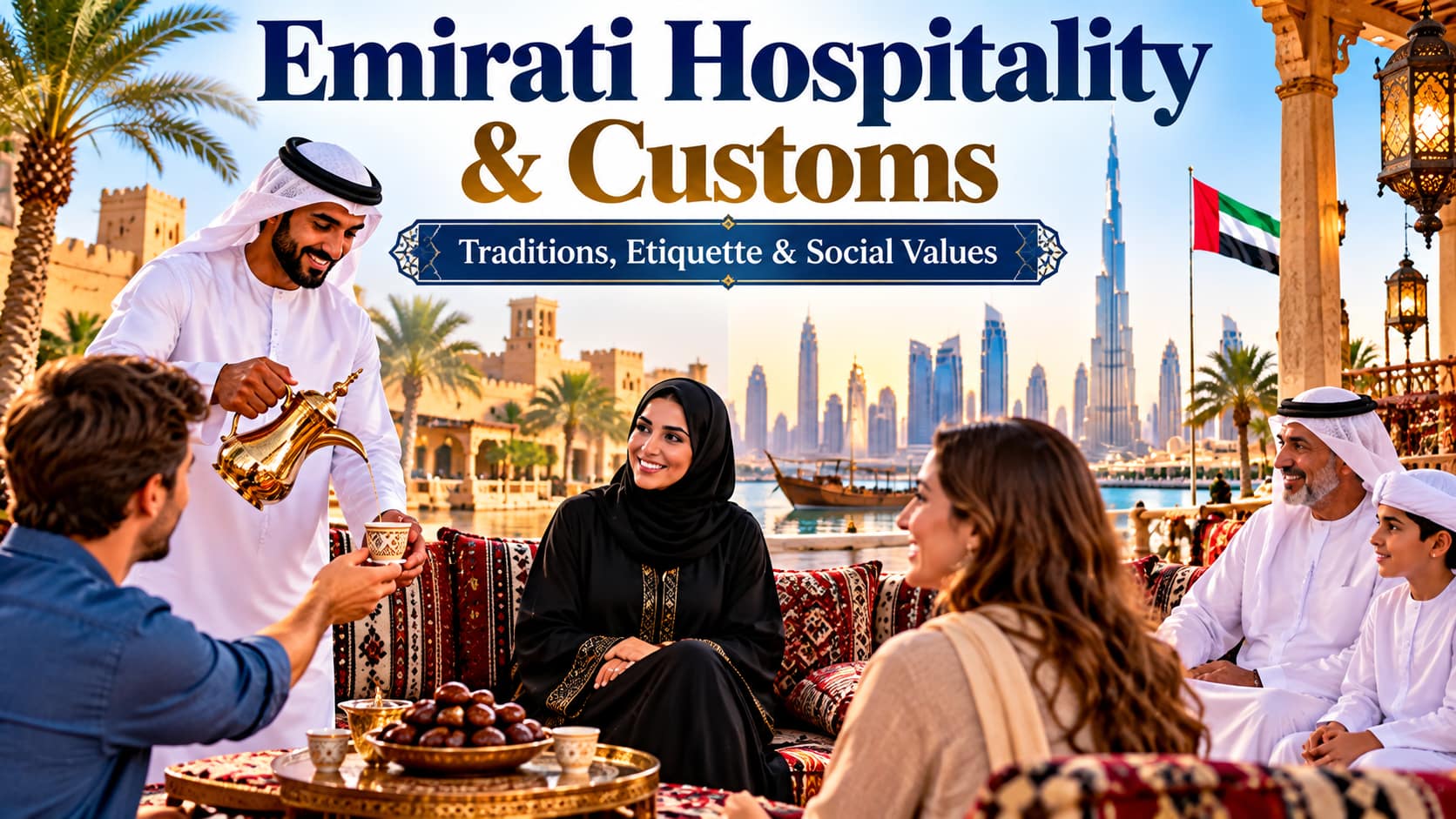



Emirati Hospitality & Customs: Etiquette & Social Values
[…] Emirati Wedding Traditions: Customs, Ceremonies & Culture […]