
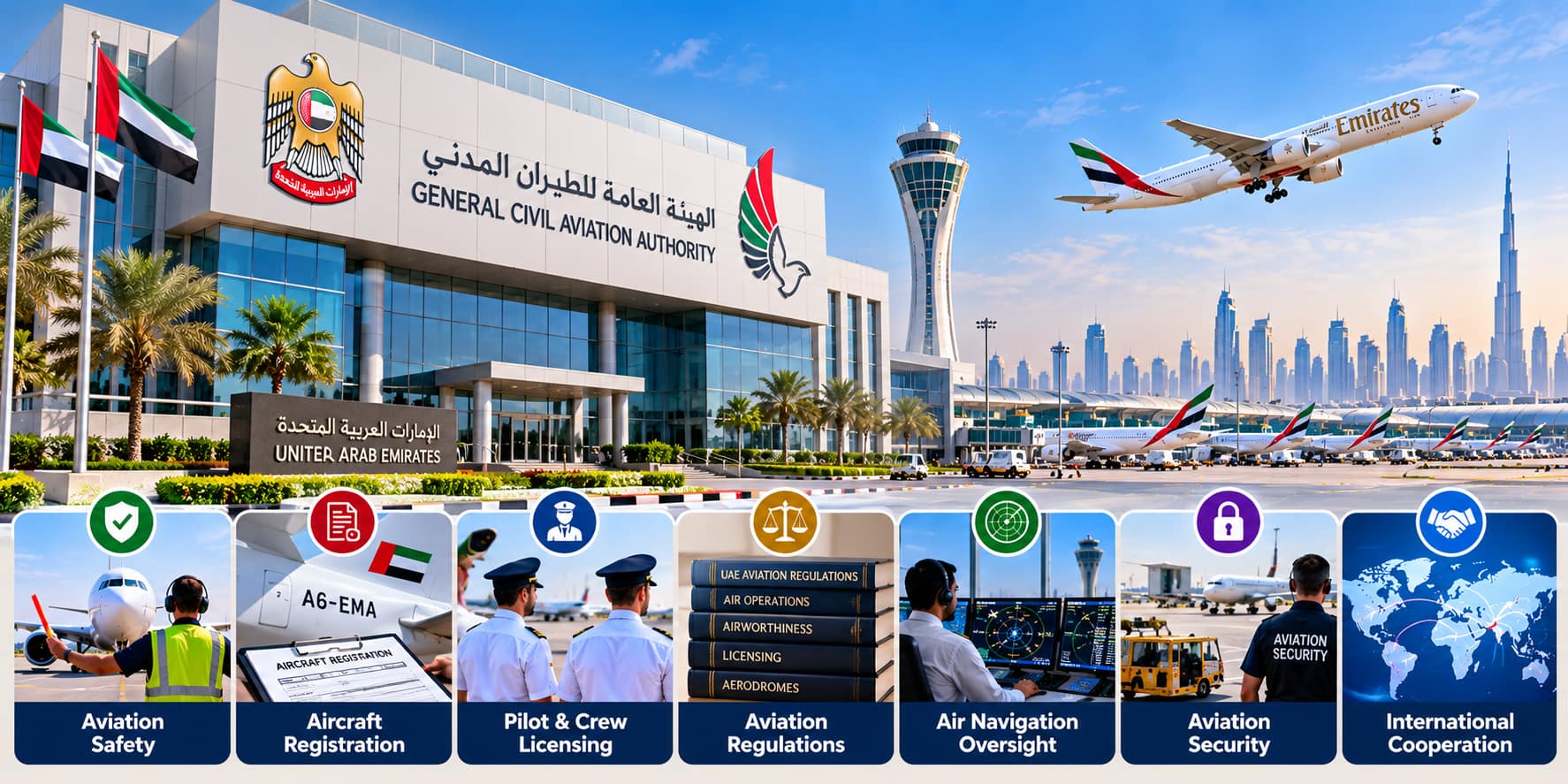
The UAE Civil Aviation Authority, officially known as the General Civil Aviation Authority (GCAA), is one of the key organisations responsible for overseeing civil aviation across the United Arab Emirates. While airlines and airports are the most visible parts of aviation, the authority works behind the scenes to establish regulations, monitor safety, oversee aviation activities and support the development of the country’s civil aviation sector.
From aircraft registration and aviation safety to licensing, air navigation oversight and international aviation standards, the GCAA has responsibilities that affect almost every part of civil aviation in the UAE.
What Is the UAE Civil Aviation Authority?
The General Civil Aviation Authority is the UAE’s federal civil aviation authority.
Its role is different from that of an airline or an airport operator.
An airline operates aircraft and carries passengers or cargo. An airport provides facilities for aircraft and passengers. The civil aviation authority, meanwhile, establishes and oversees the regulatory framework under which these activities operate.
This makes the GCAA an important part of the UAE’s overall aviation system.
Why Does the UAE Need a Civil Aviation Authority?
A modern aviation system involves thousands of aircraft movements, airlines, airports, pilots, engineers, air navigation services and other organisations.
Without common rules and regulatory oversight, it would be difficult to maintain consistent safety and operational standards across the industry.
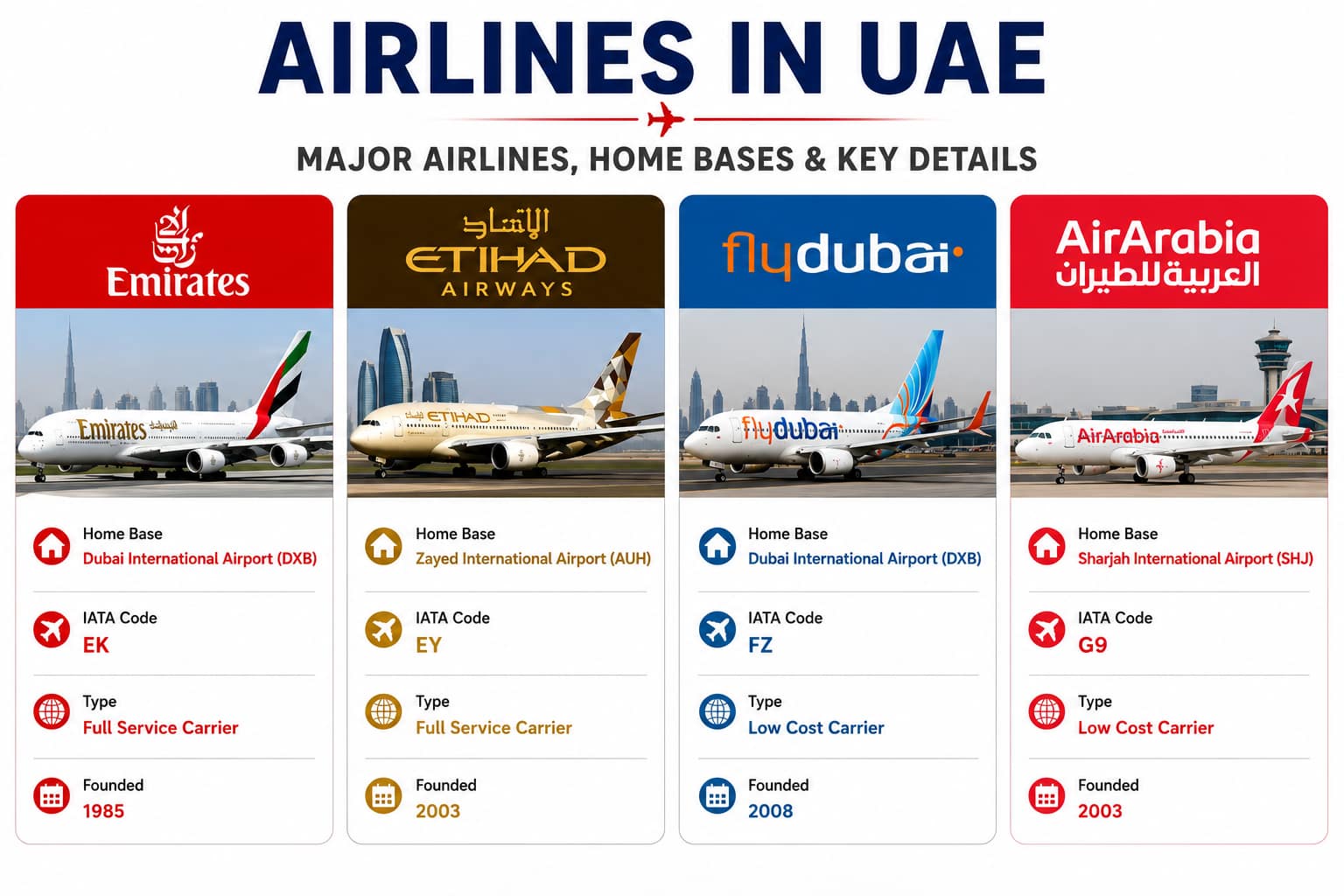
Airlines in UAE: Major Airlines, Home Bases & Key Details
Flight Routes from UAE: Global Destinations & International Connectivity
The civil aviation authority provides a central federal framework covering areas such as:
- Aviation safety
- Aircraft operations
- Pilot licensing
- Aircraft registration
- Airworthiness
- Aviation regulations
- Air navigation oversight
- Aviation security-related regulatory responsibilities
- International aviation coordination
Its work helps create a common regulatory environment for civil aviation across the UAE.
UAE Air Cargo Industry: Airports, Logistics & Global Trade
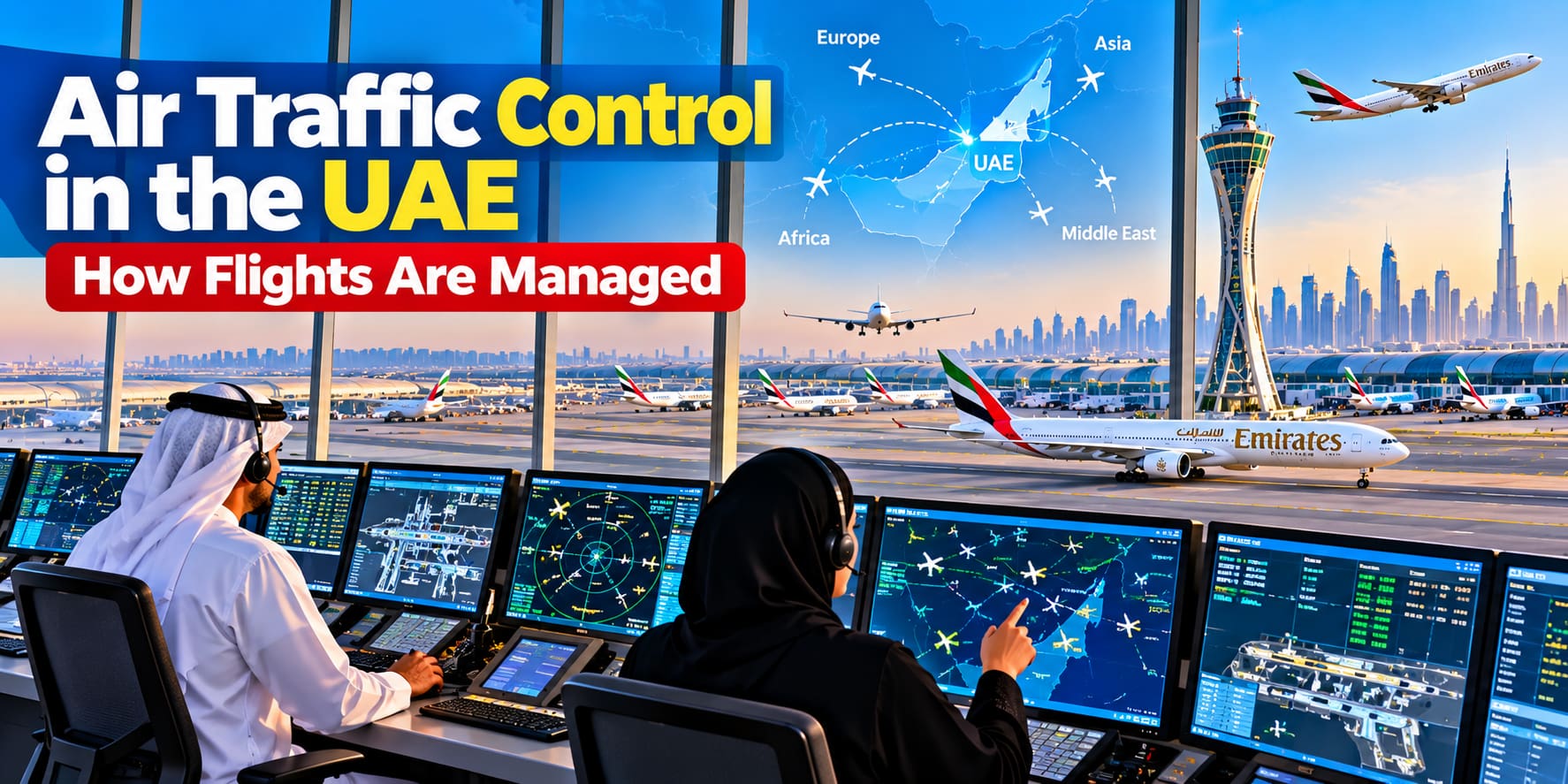
Air Traffic Control in the UAE: How Flights Are Managed
Aviation Safety Is a Core Responsibility
One of the most important responsibilities of the GCAA is aviation safety.
Safety regulation covers much more than checking whether an aircraft is ready to fly.
It involves oversight of the organisations and people involved in aviation, including airlines, operators, maintenance organisations, flight crews and other regulated entities.
The authority establishes requirements and conducts regulatory oversight to ensure aviation organisations comply with applicable standards.
The objective is to identify risks, maintain safety standards and ensure that aviation activities are conducted within the required regulatory framework.
Aircraft Registration in the UAE
Aircraft operating under the UAE’s civil aviation system may need to be registered according to applicable UAE requirements.
Aircraft registration creates an official record of an aircraft and establishes its regulatory connection with the UAE.
Registration involves documentation and compliance requirements relating to the aircraft and its ownership or operation.
This is particularly important for maintaining accurate records and determining which regulatory framework applies to an aircraft.
Ensuring Aircraft Are Airworthy
An aircraft must be maintained in a condition that allows it to operate safely.
The GCAA therefore has an important role in the regulatory oversight of aircraft airworthiness.
Airworthiness involves areas such as:
- Aircraft maintenance
- Technical inspections
- Maintenance organisations
- Continuing airworthiness
- Aircraft modifications
- Technical records
- Compliance with safety requirements
The authority’s regulatory framework helps ensure that aircraft operating under UAE oversight meet the required technical and safety standards.
Pilot and Flight Crew Licensing
Pilots require appropriate licences, qualifications and medical fitness to operate aircraft.
The GCAA establishes and oversees requirements relating to aviation personnel licensing within its regulatory responsibilities.
Depending on the type of aircraft and operation, pilots may require different qualifications and ratings.
Training organisations, examinations, experience requirements and other professional standards form part of the broader aviation licensing system.
This helps ensure that flight crews meet established competency requirements before operating aircraft in professional aviation.
Regulating Aviation Operations
Civil aviation includes many different types of operations.
Commercial passenger airlines are only one part of the industry.
Aviation operations can also include:
- Cargo flights
- Charter operations
- Private aviation
- General aviation
- Specialised aviation activities
- Training flights
- Other regulated aircraft operations
Different operations can have different risks and requirements.
The regulatory system therefore establishes standards appropriate to the type of operation being conducted.
Oversight of Air Navigation Services
Aircraft need more than airports and runways to operate safely.
They also depend on air navigation services that help manage aircraft movements through controlled airspace.
The GCAA has an important regulatory and oversight role relating to air navigation services in the UAE.
This connects directly with the country’s air traffic management system.
Air traffic controllers manage aircraft movements operationally, while the regulatory framework establishes standards and oversight requirements for the wider air navigation system.
Supporting UAE Airspace Management
The UAE is located along important international aviation routes connecting different parts of the world.
Large numbers of aircraft enter, leave and transit through the country’s wider airspace environment.
Managing this airspace requires coordination between aviation authorities, air navigation service providers, airports, airlines and neighbouring aviation systems.
The GCAA contributes to the regulatory and institutional framework that supports the safe use of UAE airspace.
Aviation Security and Regulatory Oversight
Safety and security are related but different areas of aviation.
Aviation safety generally focuses on preventing accidents and managing operational risks.
Aviation security focuses on protecting civil aviation from unlawful interference and security threats.
The UAE’s aviation regulatory system includes responsibilities relating to aviation security standards and oversight.
These requirements can affect airports, airlines, cargo operations, passengers, staff and other parts of the aviation system.
Regulating Aviation Training
Aviation professionals require specialised training before they can perform safety-critical roles.
The civil aviation regulatory system therefore includes requirements for approved training organisations and aviation education.
Training can cover areas such as:
- Pilot training
- Flight operations
- Aircraft maintenance
- Air traffic-related functions
- Safety procedures
- Technical qualifications
Regulatory oversight helps ensure that aviation training organisations meet the required standards.
Aircraft Maintenance Organisations
Modern aircraft require highly specialised maintenance.
Airlines and aircraft operators depend on approved maintenance organisations to inspect, repair and maintain aircraft.
The GCAA’s regulatory framework covers requirements for organisations involved in aircraft maintenance and related technical activities.
This creates a chain of accountability extending from the aircraft operator to the engineers and maintenance facilities responsible for keeping aircraft technically safe.
Aviation Regulations and Standards
A major responsibility of a civil aviation authority is establishing and maintaining aviation regulations.
These regulations provide the framework within which airlines, airports, operators, pilots and other aviation organisations work.
UAE aviation regulations are influenced by international aviation standards and requirements.
This is particularly important because aviation is an international industry.
A flight may involve an aircraft registered in one country, operated by an airline based in another country and travelling through several other countries before reaching its destination.
Common international standards therefore play an important role in aviation regulation.
Relationship With International Aviation Organisations
The UAE’s aviation system operates within the wider international aviation framework.
The GCAA works with international aviation organisations and other national aviation authorities on matters involving civil aviation standards, safety, air navigation and international operations.
This international cooperation is essential because aircraft do not stop at national borders.
Aviation authorities need to coordinate rules, safety information and operational requirements across countries.
Aviation Accident and Incident Investigation
Another important part of aviation safety is understanding what happens when an accident or serious incident occurs.
Investigations can examine factors such as:
- Aircraft systems
- Flight operations
- Weather
- Human factors
- Maintenance
- Air traffic management
- Operational procedures
The objective of an aviation safety investigation is not simply to determine what happened.
The findings can also help identify lessons that may improve aviation safety and reduce the possibility of similar occurrences in the future.
Consumer Protection and Passenger Interests
Although the GCAA is primarily a regulatory authority rather than an airline customer-service organisation, civil aviation regulation can also affect passengers.
Rules and regulatory frameworks can cover areas connected with airline operations, passenger rights and the obligations of aviation operators.
This provides a regulatory foundation for interactions between aviation companies and the travelling public.
Passengers, however, should distinguish between the responsibilities of the GCAA and those of individual airlines or airports when seeking assistance with a specific issue.
Regulating the Growing Aviation Sector
The UAE aviation industry has expanded considerably over the years.
The country now has major international airlines, busy airports, cargo networks, business aviation and a wide range of aviation-related companies.
As the industry grows, regulation must also evolve.
New aircraft technologies, unmanned aircraft, advanced digital systems, changing passenger behaviour and new forms of aviation create new regulatory questions.
The civil aviation authority therefore has to adapt regulations and oversight to developments within the industry.
Drones and New Aviation Technologies
The development of drones and other emerging aviation technologies has created another area requiring regulation.
Unmanned aircraft operate differently from conventional passenger aircraft, but they still share the wider airspace environment.
Their safe use requires rules covering areas such as registration, operations, restricted areas and responsible flying.
As drone technology develops, aviation regulators face the challenge of encouraging useful applications while protecting conventional aviation and people on the ground.
How the GCAA Differs From an Airport Authority
It is important not to confuse the civil aviation authority with an airport operator.
An airport operator manages the day-to-day operation and facilities of a particular airport.
This can include:
- Terminals
- Gates
- Runways
- Passenger facilities
- Airport services
- Ground infrastructure
The GCAA operates at the federal regulatory level.
Its role is to establish and oversee aviation standards across the UAE rather than manage every airport as a day-to-day commercial facility.
How the GCAA Differs From an Airline
An airline is responsible for operating flights.
It manages aircraft, flight crews, routes, schedules, passengers, cargo and commercial services.
The GCAA does not operate passenger flights.
Instead, it regulates and oversees aspects of the aviation environment in which airlines operate.
This distinction helps explain why the authority is important even though passengers may rarely interact with it directly.
Why the GCAA Matters to UAE Aviation
The UAE has built a major international aviation network connecting the country with markets around the world.
That network depends on more than modern aircraft and large terminals.
It requires:
- Clear regulations
- Qualified aviation professionals
- Safe aircraft
- Reliable air navigation systems
- Effective oversight
- International cooperation
- Continuous safety improvement
The GCAA provides an important part of this regulatory foundation.
The Future Role of the UAE Civil Aviation Authority
The UAE’s aviation sector is continuing to develop, with new airport infrastructure, growing passenger and cargo activity, emerging technologies and increasingly digital aviation systems.
This means the role of aviation regulation will also continue to evolve.
Future regulatory challenges may include:
- Increasing air traffic
- Advanced automation
- Artificial intelligence in aviation
- Drone integration
- New aircraft technologies
- Digital aviation systems
- Cybersecurity
- Sustainable aviation
- Advanced air mobility
The regulator will need to balance innovation with safety and operational reliability.
Conclusion
The UAE Civil Aviation Authority plays a fundamental role in the country’s aviation system.
From aircraft registration and airworthiness to pilot licensing, aviation regulations, air navigation oversight, safety and international coordination, its responsibilities cover many of the systems that allow civil aviation to operate safely and efficiently.
Airlines and airports may be the most visible parts of aviation, but the regulatory framework behind them is equally important.
As the UAE continues developing its airports, airlines, cargo networks and future aviation technologies, the GCAA will remain an important part of ensuring that the country’s aviation sector grows within a structured, regulated and safety-focused environment.









UAE Air Cargo Industry: Airports, Logistics & Global Trade
[…] UAE Civil Aviation Authority: Roles & Responsibilities […]